Define the scope
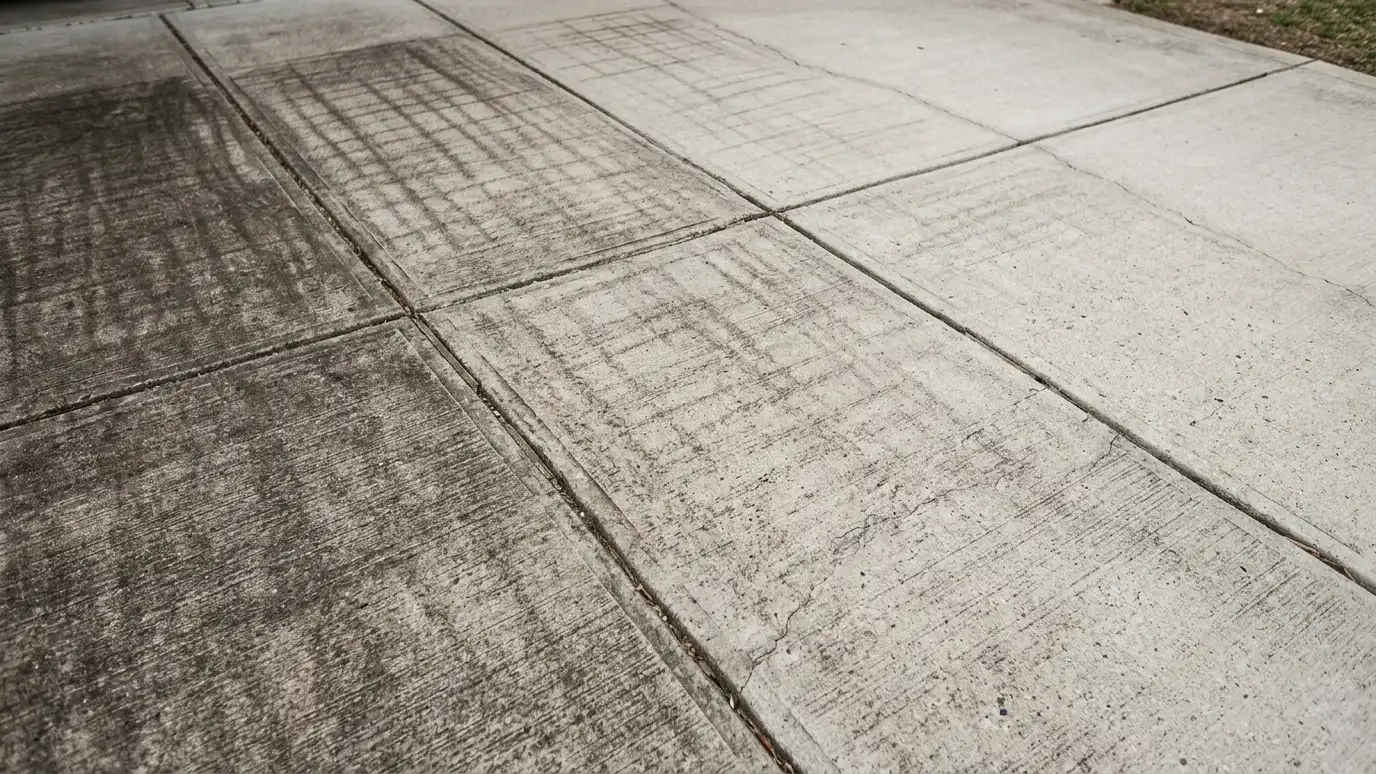
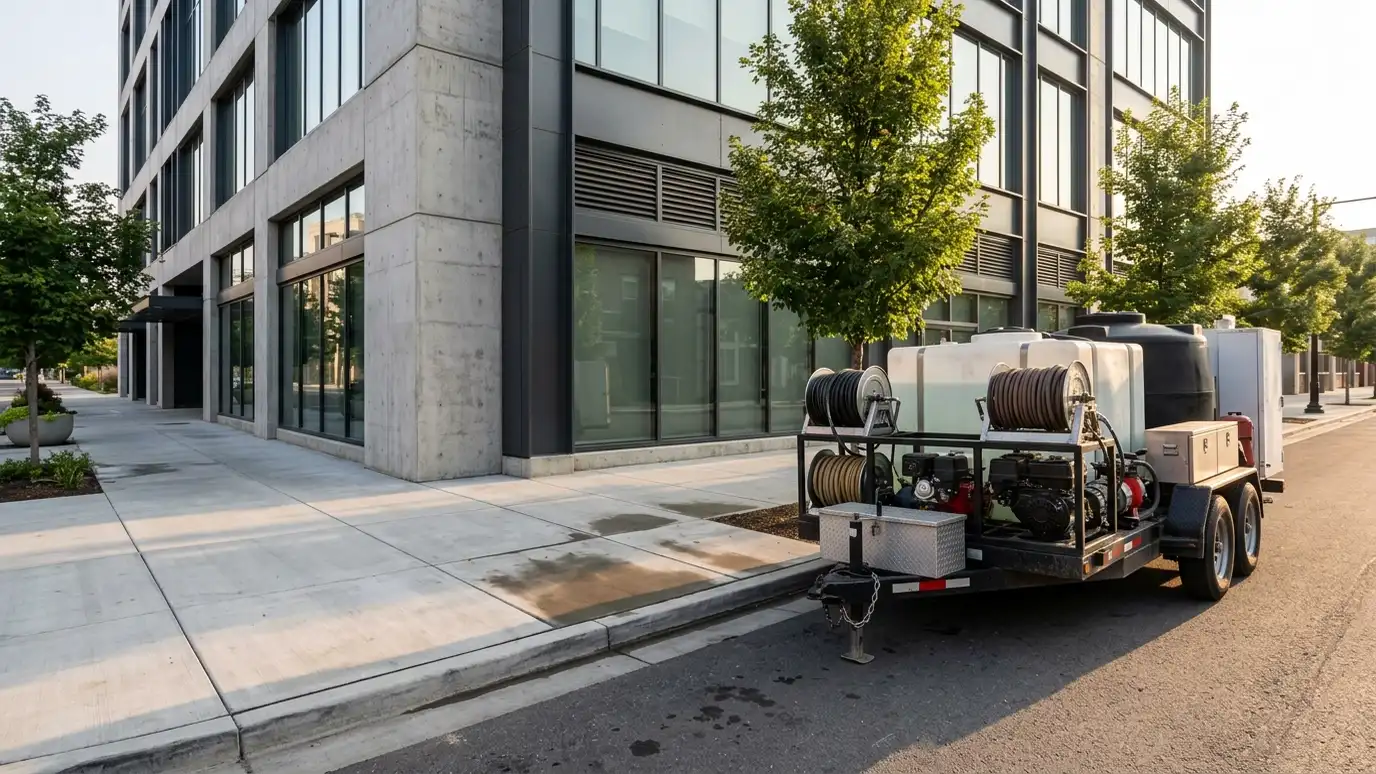
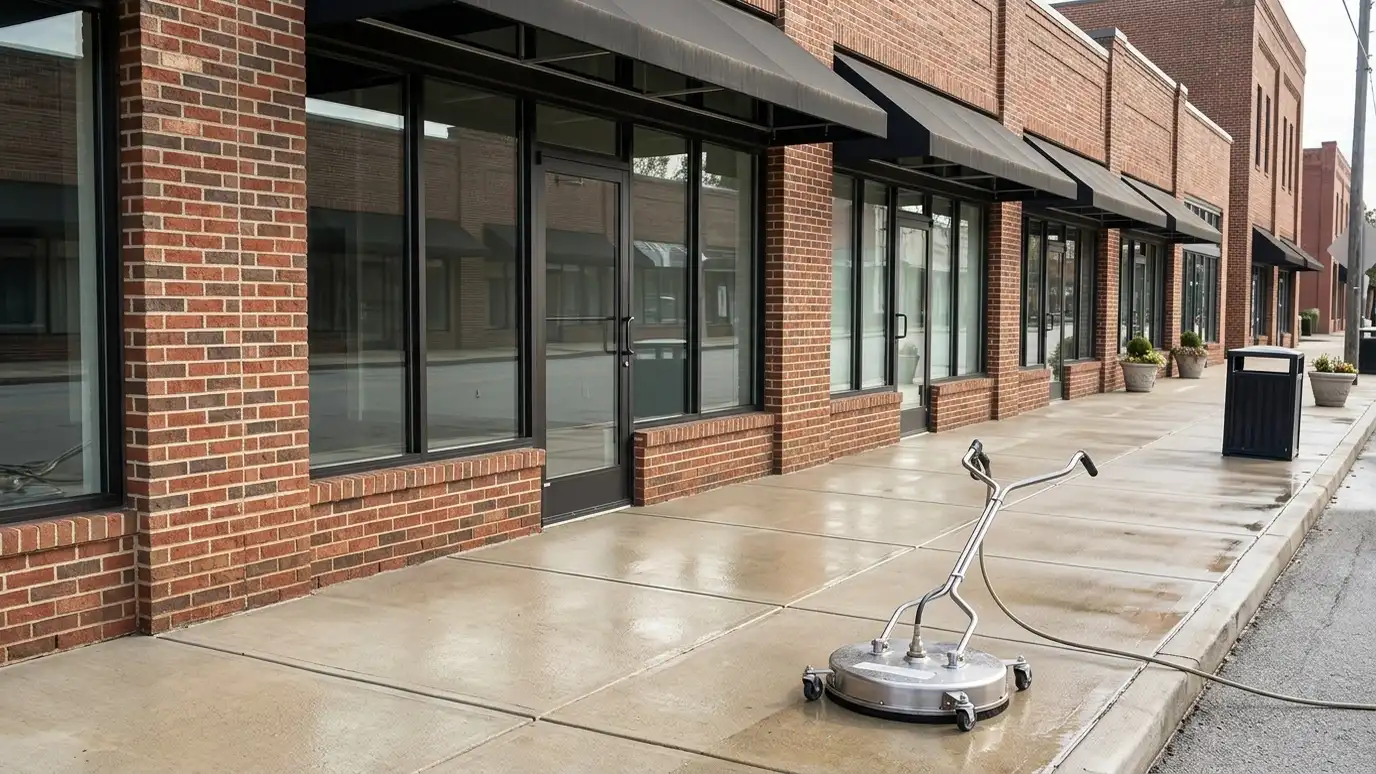
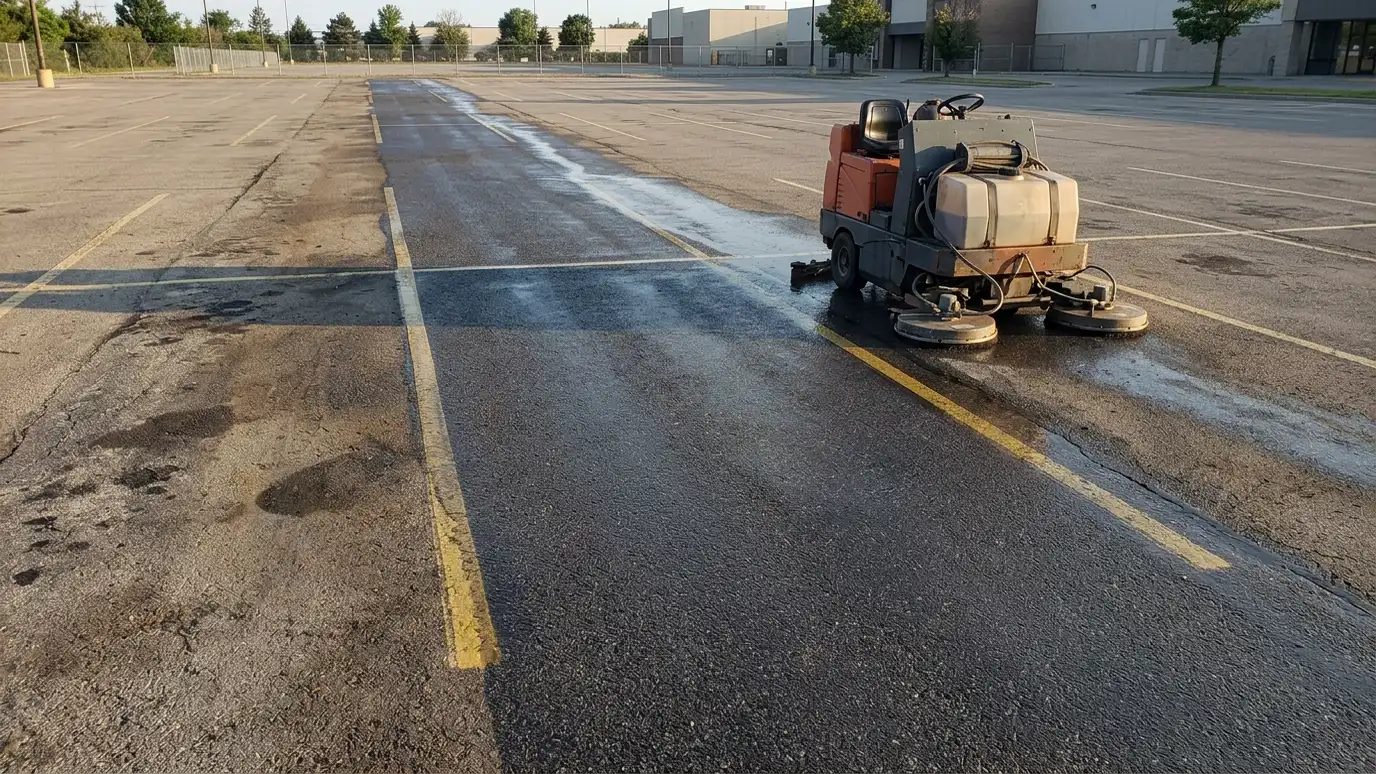
List every surface: building exterior, sidewalks, entries, parking, garages, dumpster pads, drive-thru lanes and signs. Note materials and problem areas.
A clear scope helps contractors quote accurately and helps you compare.
Photos make the list easier to share.
Gather a property map or satellite view and mark each area to be cleaned. Add notes about drains, grease traps, landscaping and any problem areas. A marked map makes quotes more accurate and helps new staff.
Schedule around operations
Early mornings, nights and weekends keep customers and staff out of the way. Plan around deliveries, events and weather.
Phased work keeps parking and entries open.
Ask the contractor how they communicate delays.
Share your calendar with the contractor, including deliveries, events and holidays. A good contractor will build around them and warn you early if weather changes the plan.
Safety and signage
Wet surfaces and equipment are hazards. Cones, signs and barriers protect the public.
Ask how the contractor handles customers who walk through the work area.
Confirm who is responsible for traffic control.
Ask who is responsible for signs, cones and notifying tenants. A short checklist avoids confusion. Safety is much easier to manage when everyone knows their role.
Wastewater and runoff
Restaurants, plants and parking areas often involve oil, grease and soap. Plan containment and recovery where needed.
Check lease terms and local rules, and ask what the contractor does.
Drains, grease traps and neighbors deserve attention.
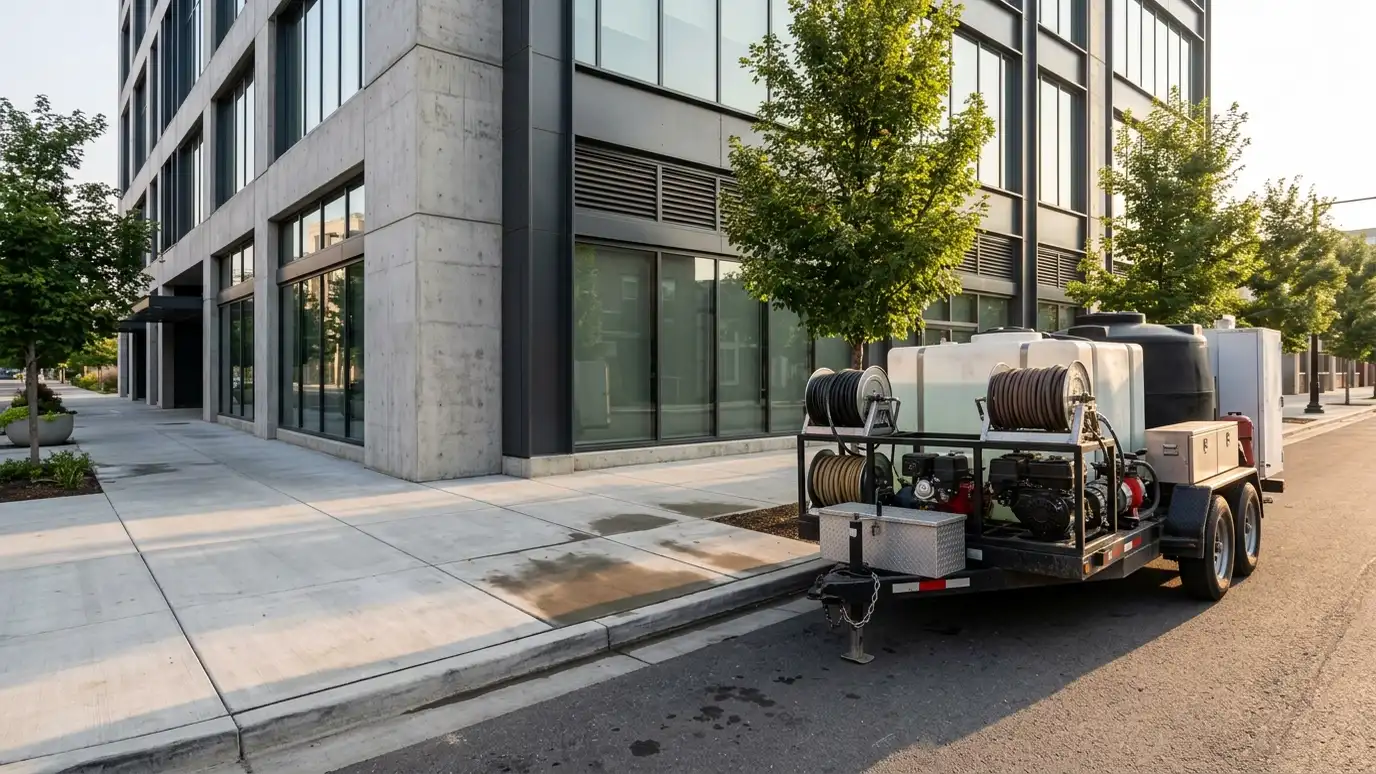
If you manage restaurants or industrial sites, ask about hot water, degreasers and recovery equipment. These tools matter for oil and grease, and they also protect drains and neighbors.
Documentation
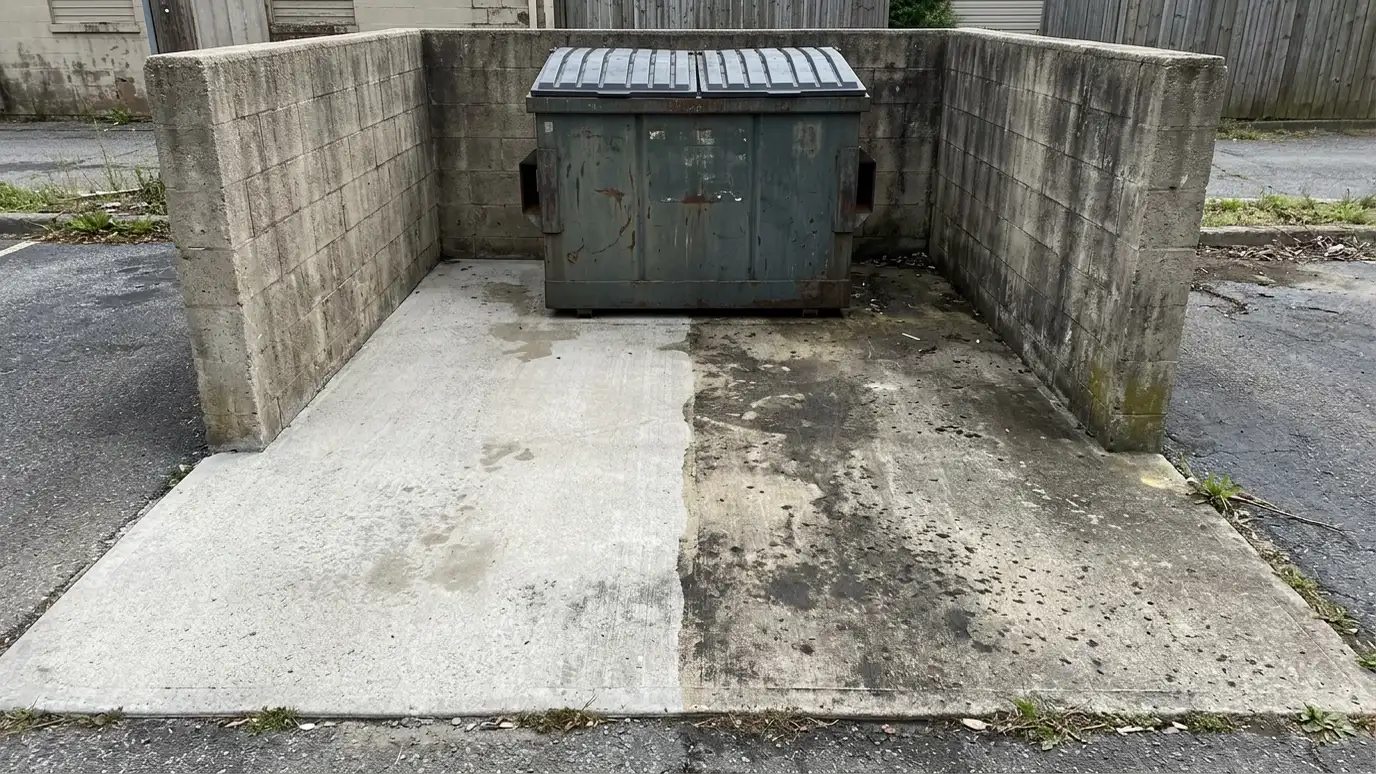
Before and after photos, dates and short reports help owners, boards and auditors. Ask for them in the scope.
A good contractor provides them without a fuss.
Records also help track schedules over time.
Store photos and reports in a shared folder labeled by property and date. They help with budgets, lease questions and owner reports. A simple system saves time later.
Recurring service
Regular visits keep properties consistent and often make each visit lighter and faster. Sidewalks and entries may need weekly or monthly service.
Buildings and lots may need annual cleaning.
Agree on a calendar and adjust it as seasons change.
Review the schedule each quarter. If sidewalks stay clean, you may be able to stretch visits, and if they get dirty quickly, you can add one. Flexibility keeps costs sensible.
Write down the scope, schedule around business hours, plan safety and runoff and ask for photos after every visit.