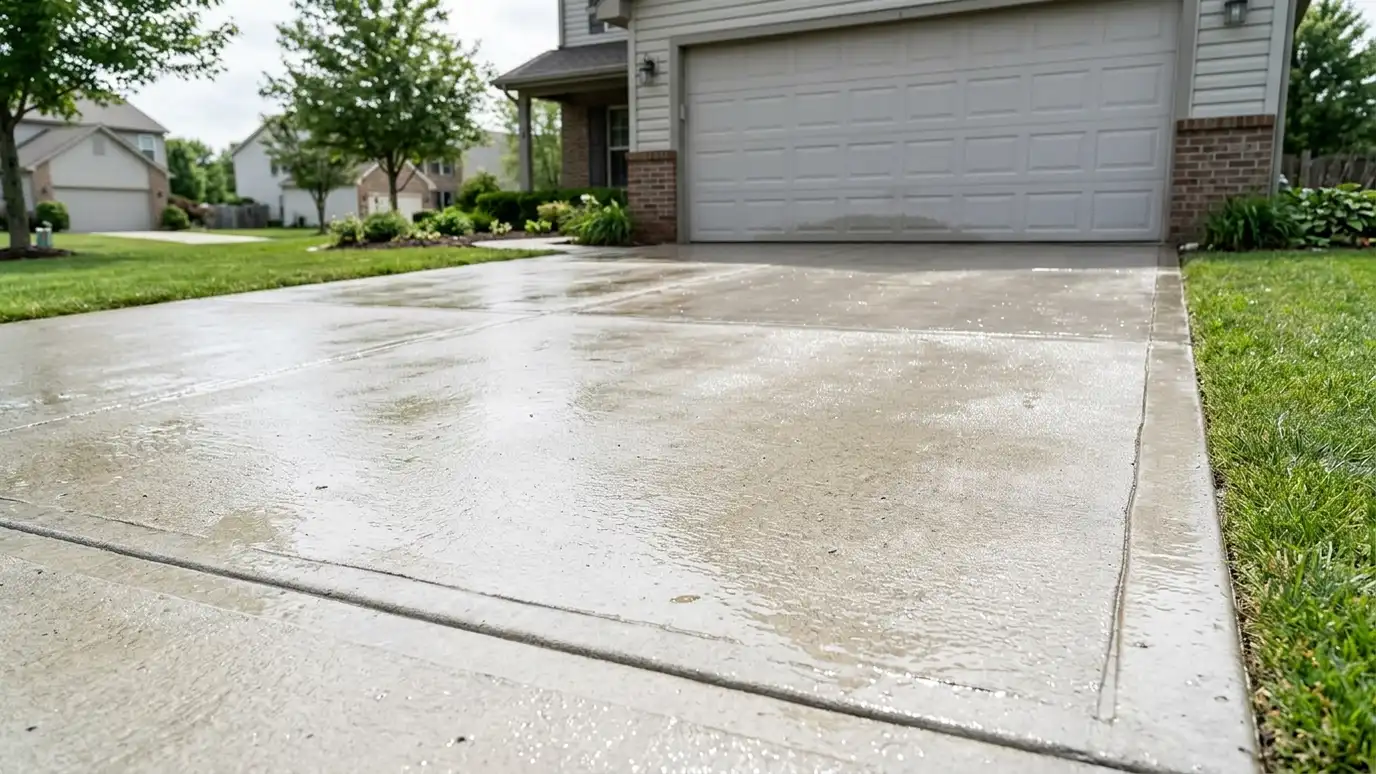
Why concrete gets dark
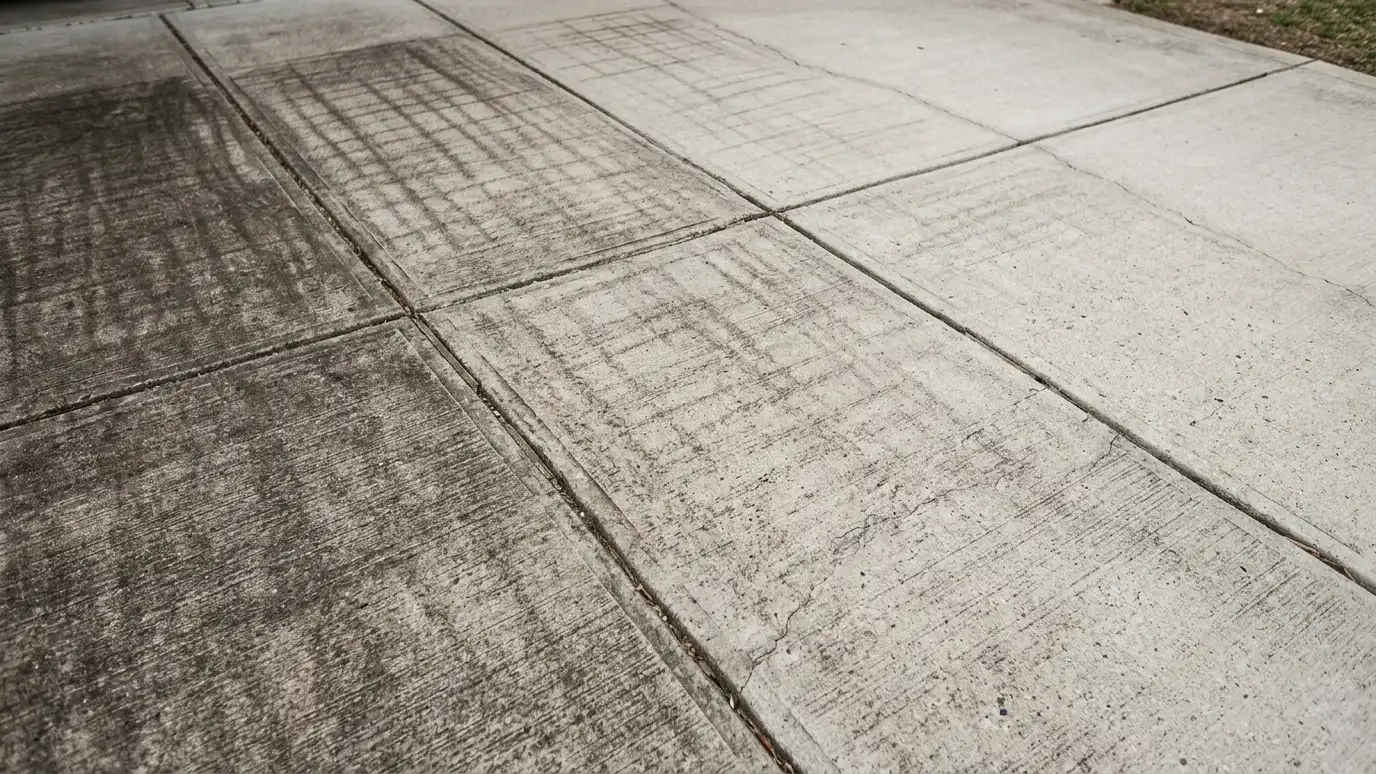
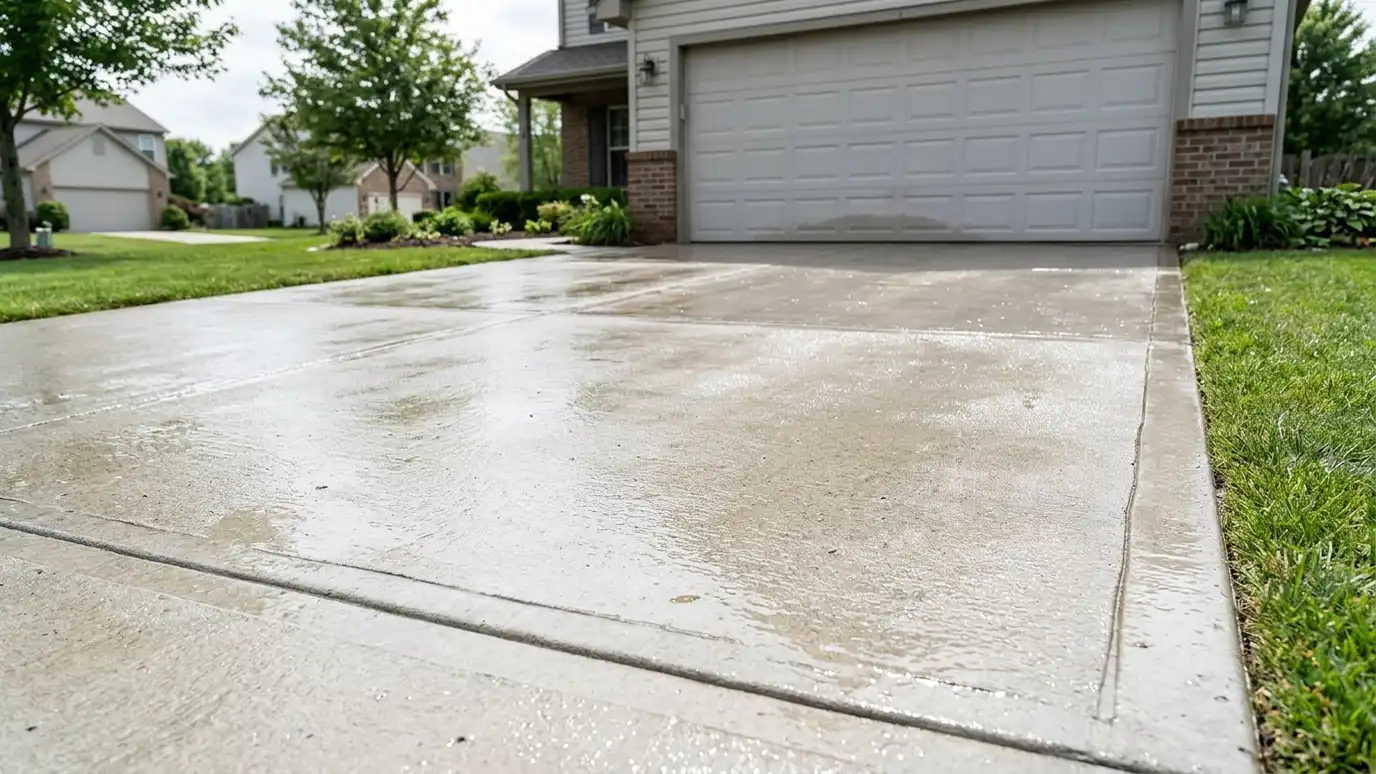
Concrete is porous, so dirt, leaf tannins, oil, rust and algae settle into the surface. Shaded driveways grow black mildew quickly.
Rain does not wash it clean, because the stains are held in the pores.
Cleaning opens the surface and shows the true color.
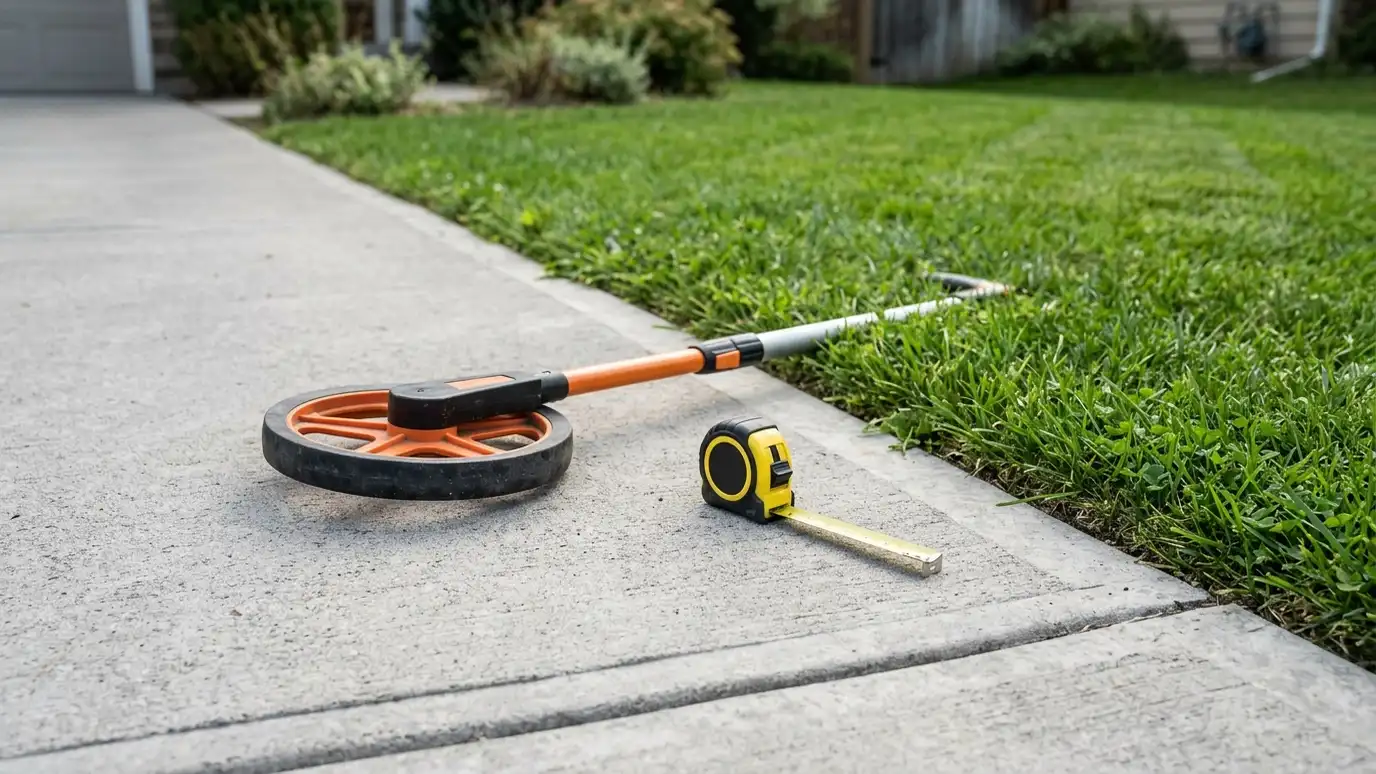
Walk the driveway before the estimate and note oil spots, rust stains, cracks and weeds. Photos help, and so does a note about how long the stains have been there. The more we know, the better we can plan.
Surface cleaners
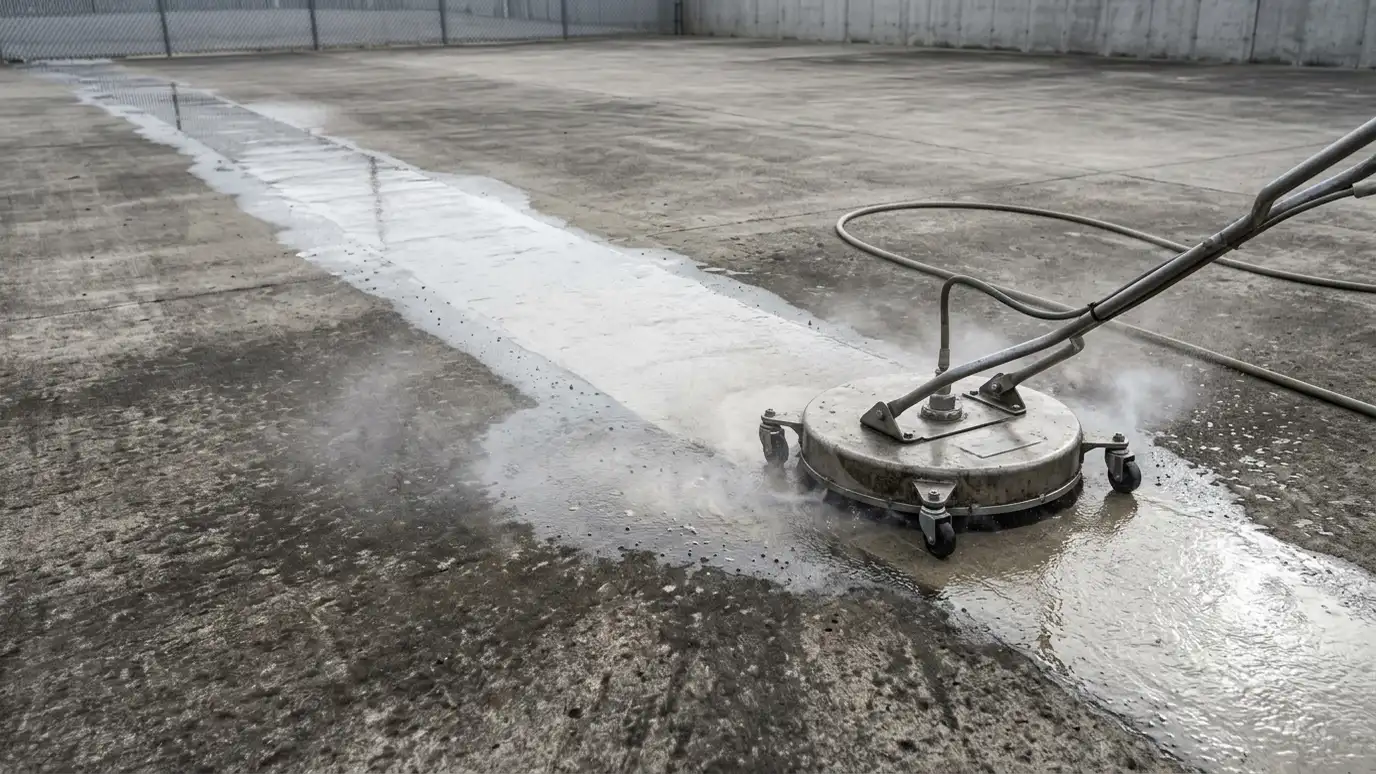
A rotary surface cleaner spins high-pressure jets under a cover, cleaning large areas quickly and evenly without wand marks.
A bare wand can leave stripes and gouges if used carelessly.
Surface cleaners are the standard for driveways and slabs.
Ask whether the company uses a surface cleaner or only a wand. The tool tells you a lot about the expected results. A surface cleaner is the standard for even, professional finishes on flat concrete.
Treating stains
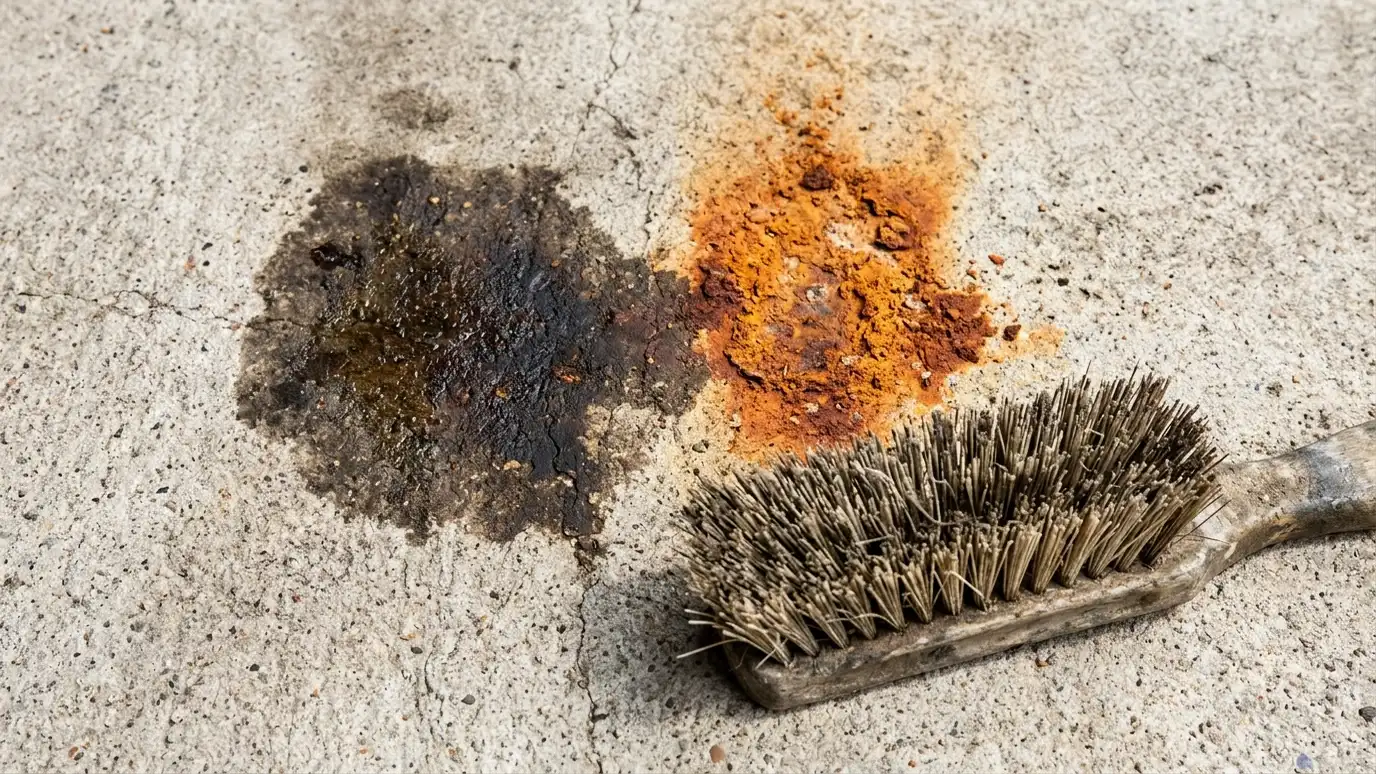
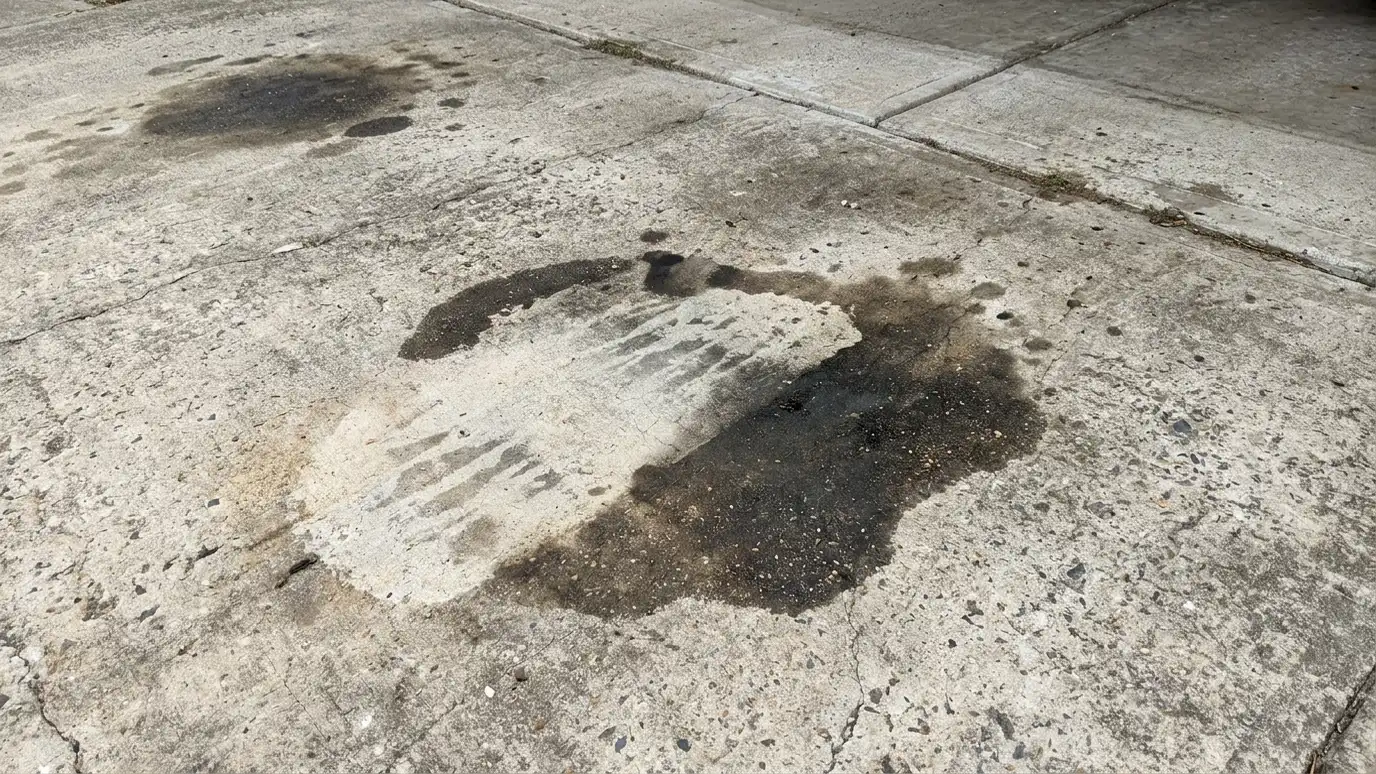
Oil needs degreaser and sometimes heat. Rust needs an acid-based treatment. Tire marks and leaf stains lift with detergent and dwell time.
Old, deep stains may fade rather than vanish.
An honest estimate explains this up front.
If you have a stain you care about most, point it out. We treat it first, test the result and tell you honestly how much it lightened. Old stains may need two visits or may fade only partly.
Edges, joints and weeds
Control joints and edges collect dirt and weeds. A wand finishes these areas after the main pass.
Cleaning can clear weeds from cracks, and joint filler helps keep them away.
Check the driveway for cracks that need repair.
After cleaning, weeds may come back in the cracks. A sweep with joint filler or a spot treatment helps, and sealing the cracks keeps water out. We suggest a few simple steps when we finish.
Sealing
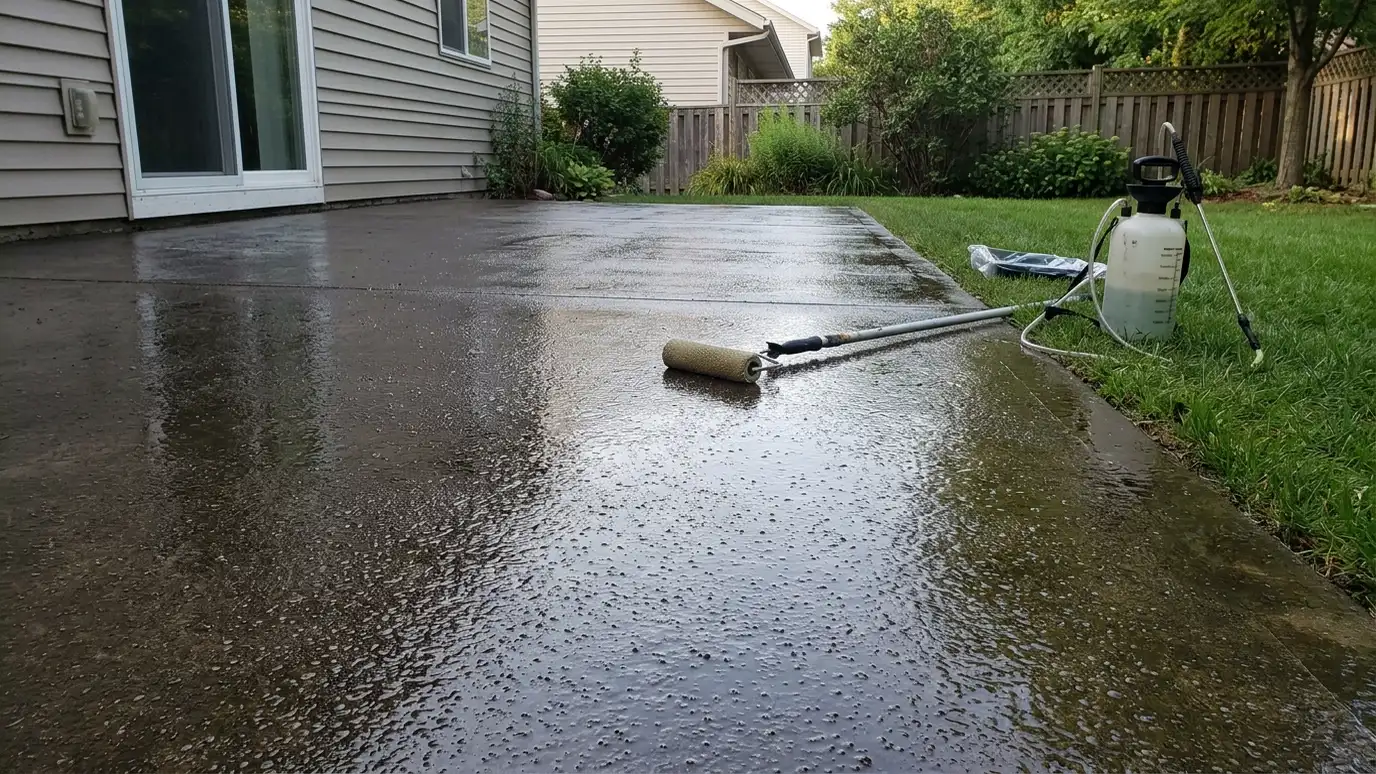
Sealers slow staining and moisture and make the next cleaning easier. Penetrating sealers keep a natural look and film-forming sealers add sheen.
Concrete must be clean and dry before sealing.
Ask about traction if the area is shaded or wet.
Choose a sealing day with dry weather and moderate temperatures. Keep cars off until the product has cured, and warn guests and delivery drivers. A little planning avoids tire marks on fresh sealer.
Upkeep
Sweep leaves and wash spills quickly. Place drip pans under leaking vehicles.
Clean every one to three years, depending on shade and use.
A recurring plan keeps things simple.
Sweep leaves in fall and rinse spills quickly. If a vehicle leaks, put a drip pan under it. These small habits can keep a driveway looking clean for years between washes.
Use a surface cleaner, treat stains by type, be realistic about old marks and consider sealing a clean, dry slab.