What the black streaks are
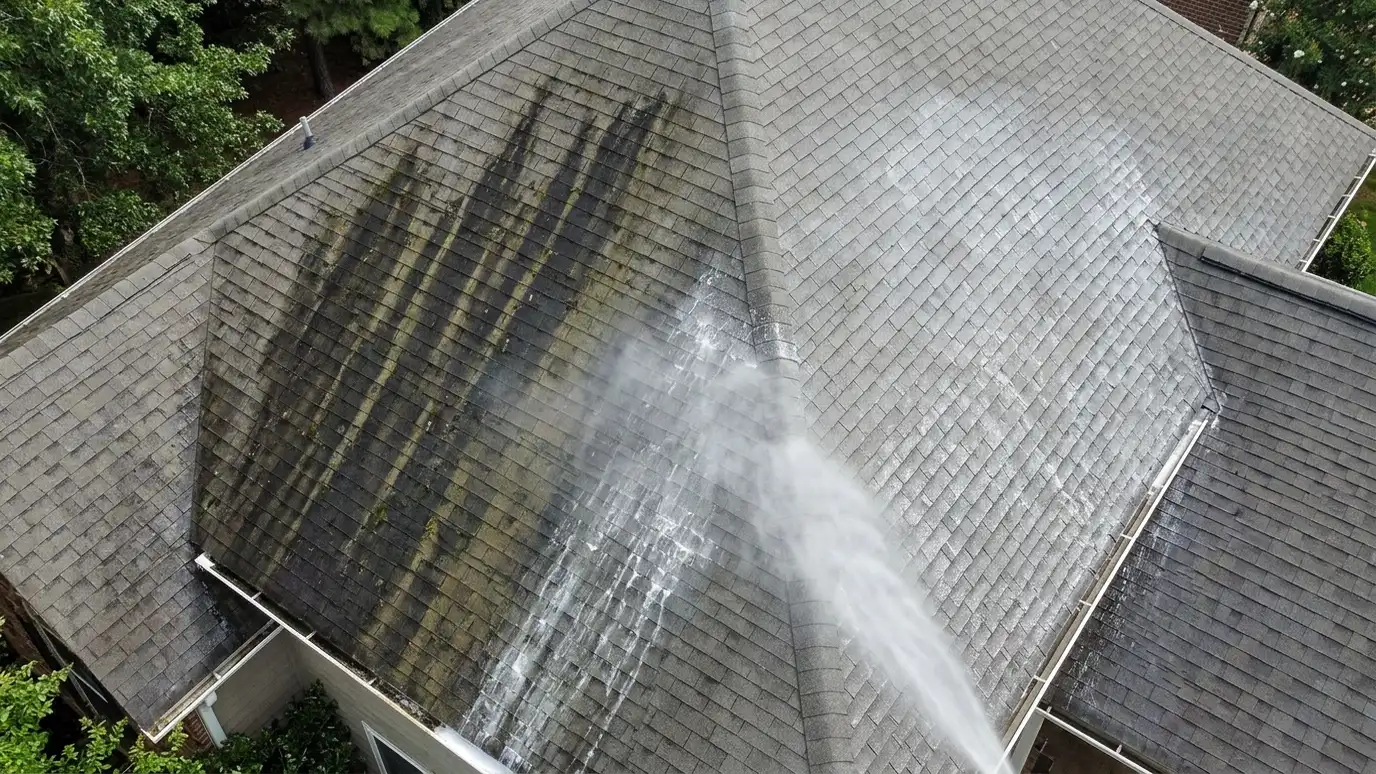
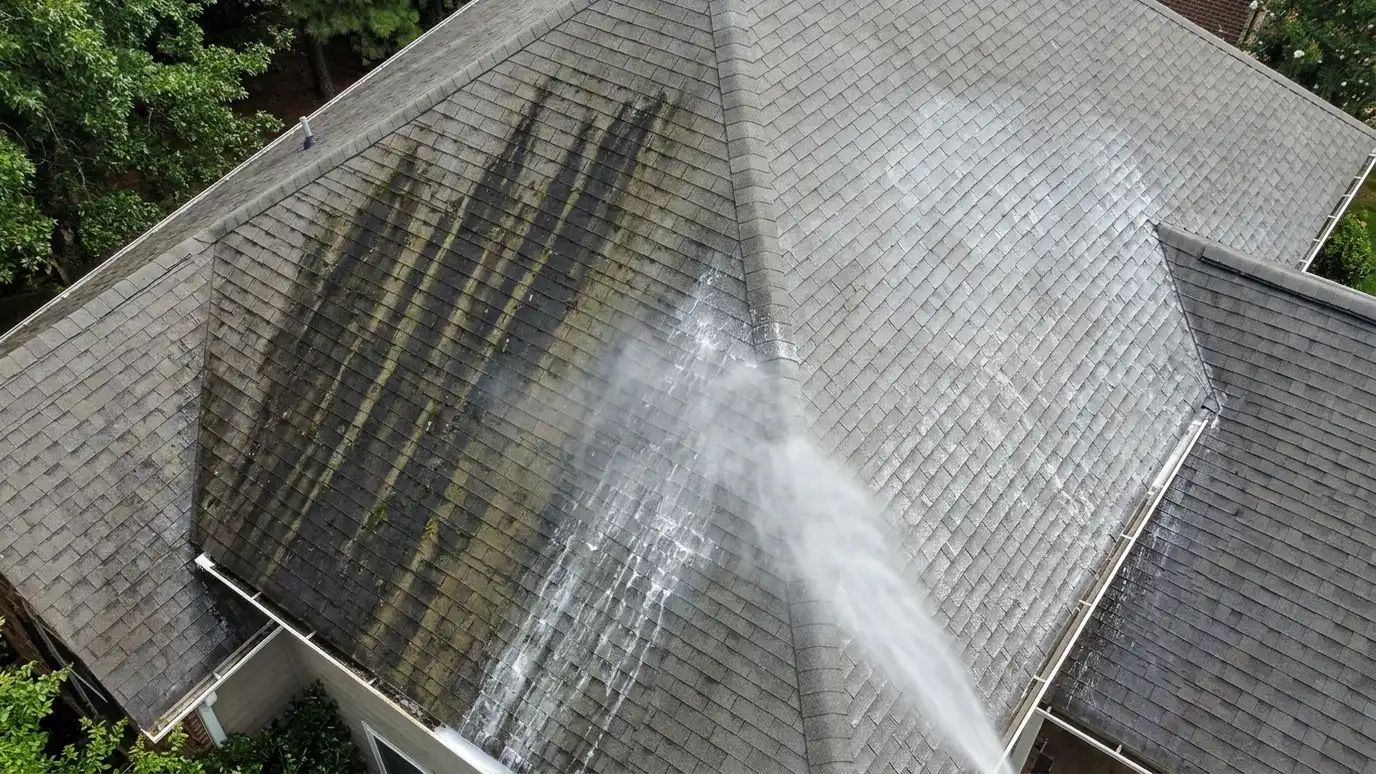
The dark streaks on shingles are algae that feed on limestone filler in the shingle. They spread with humidity and run down the roof as rain moves spores.
They are mostly cosmetic at first, though they hold moisture and can make a roof look old.
Some shingles are made with algae-resistant granules.
Look for algae-resistant shingles when you replace a roof. They resist streaking for longer and reduce the need for cleaning. Ask your roofer about options if you have a heavily shaded home.
Moss and lichen
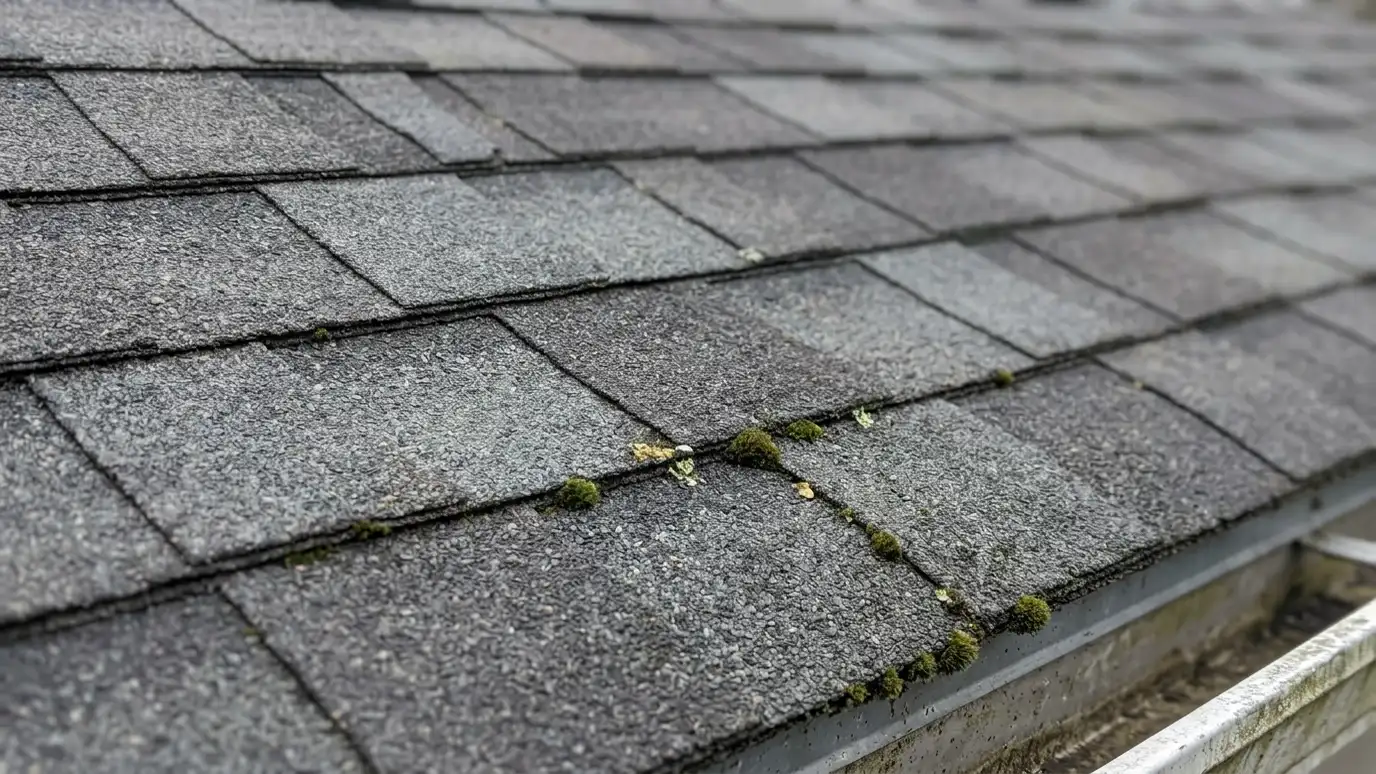
Moss and lichen grow on shaded slopes and valleys. They hold moisture against shingles, lift edges and work into joints.
Treatment kills them so they loosen and rinse away gently.
Scraping hard tears granules and shortens roof life.
Trim overhanging branches to let sunlight reach the roof. Moss and algae love shade, and a few branches can make a big difference. Less shade also helps shingles dry out faster after rain.
Why soft washing
A cleaning solution is applied at low pressure, left to work and rinsed gently. This treats growth without stripping granules.
High-pressure blasting removes granules, lifts shingles and can force water under the roof.
Metal and tile roofs also suit soft washing.
Ask a company about the solution it uses on roofs and how it protects your plants. Roofs shed solution onto landscaping below, and good crews pre-wet, shield and rinse. Their plan should be clear and specific.
Safety and access
Roofs are dangerous. We use safe ladders, extension systems and lifts and avoid wet, steep or fragile roofs.
Owners should not walk on wet or algae-covered roofs.
If the roof is unsafe, we recommend another approach or a roofer.
Never climb onto a wet or mossy roof. If you need to look at it, use binoculars or ask us to take photos. A fall is the most serious risk in any roof project.
Protecting plants and gutters
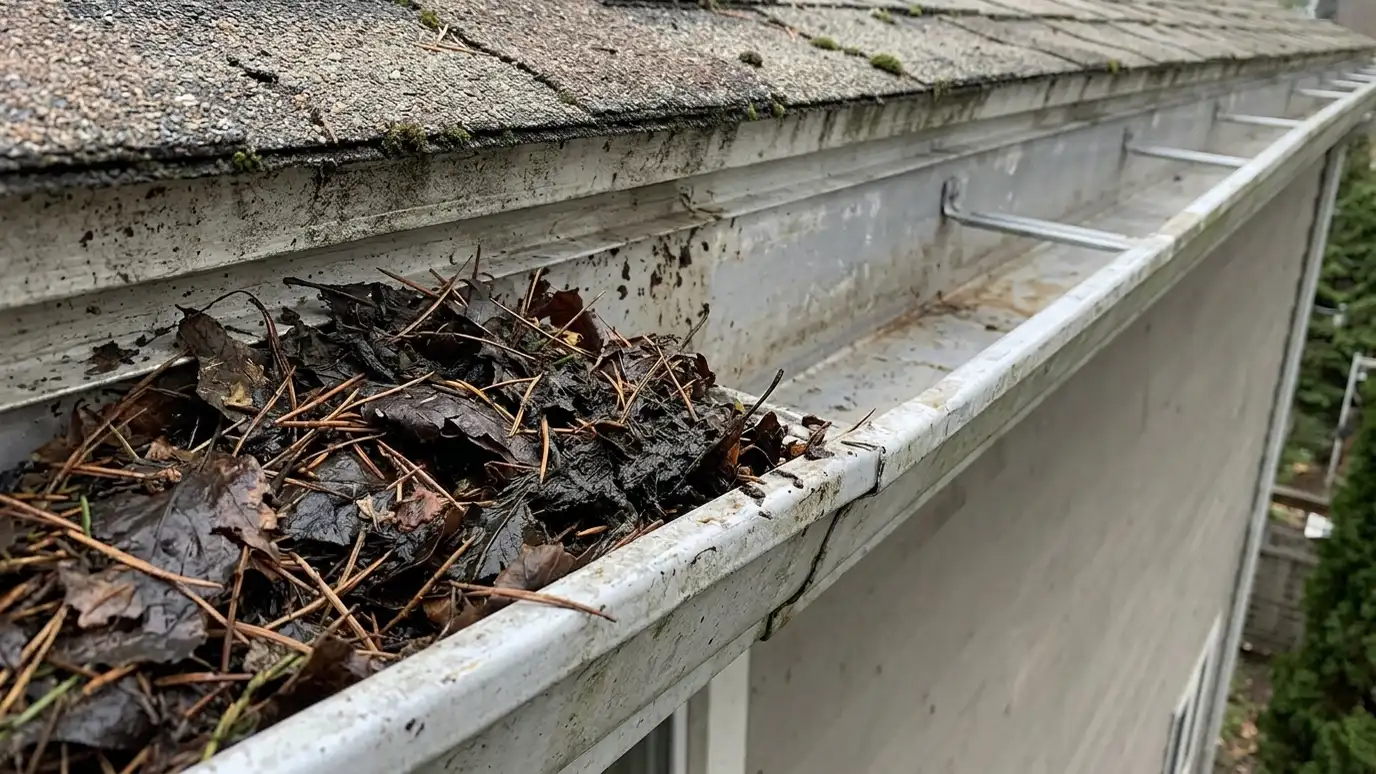
Plants below are pre-wet, covered and rinsed. Gutters are flushed after cleaning.
We keep solution out of storm drains where rules and good practice require.
Ask any company how they protect your yard.
Mention any plants, ponds or rain barrels under the roofline. We plan around them and rinse thoroughly. Tell us about solar panels or skylights too.
When cleaning is not enough
If shingles are curling, cracked or missing granules, cleaning will not fix them. A roofer should evaluate.
Leaks, damaged flashing and soft decking need repair.
We tell you honestly what we see and suggest the right specialist.
After cleaning, take a few photos and compare them with the pre-clean images. If you see lifted tabs, missing granules or exposed nails, call a roofer for repairs.
Treat roof growth with a soft wash, never blast shingles and call a roofer for leaks or worn roofing.