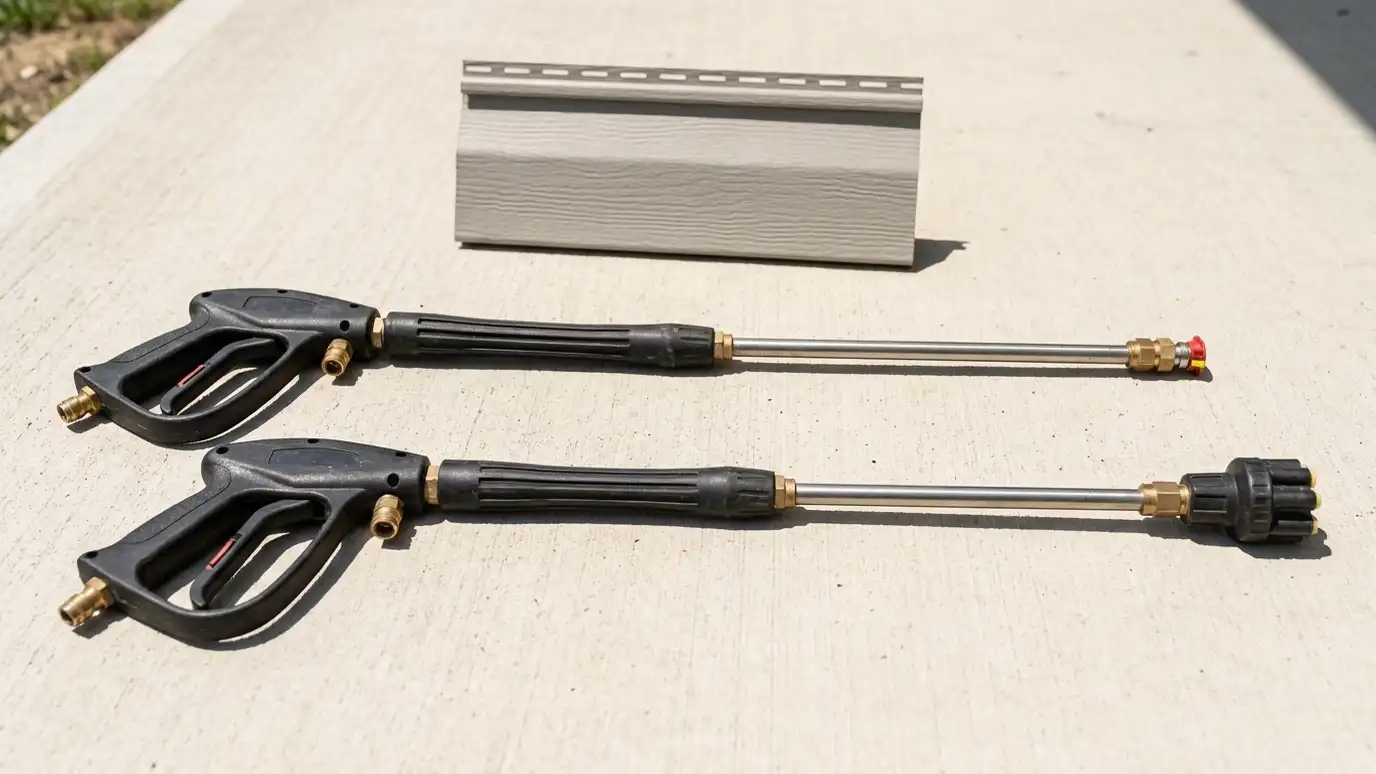
How high-pressure washing and low-pressure soft washing differ, which surfaces suit each and why the right choice protects your property.
Pressure washing uses a strong stream of water to blast dirt off hard surfaces such as concrete, brick and some metal. Soft washing uses low pressure, closer to a garden hose, and relies on a cleaning solution to loosen algae, mildew and grime before a gentle rinse. Both can leave a surface clean, and the difference lies in how they get there and what they risk along the way.
Concrete and driveways usually suit pressure and surface cleaners. Siding, stucco, roofs, screens and painted wood usually suit soft washing, because force can gouge, strip or push water behind them. Many jobs use both. Owners in Nashville benefit from asking which method a contractor plans for each surface and why. We explain our choices at every Free Estimate.
Higher pressure that lifts dirt from hard surfaces like concrete.
Low pressure plus a cleaning solution for delicate surfaces.
Usually soft washed to protect finish and avoid water intrusion.
Usually cleaned with surface cleaners at controlled pressure.
Soft washed, never blasted, to protect granules.
Cleaned with low pressure and brushing to protect the grain.
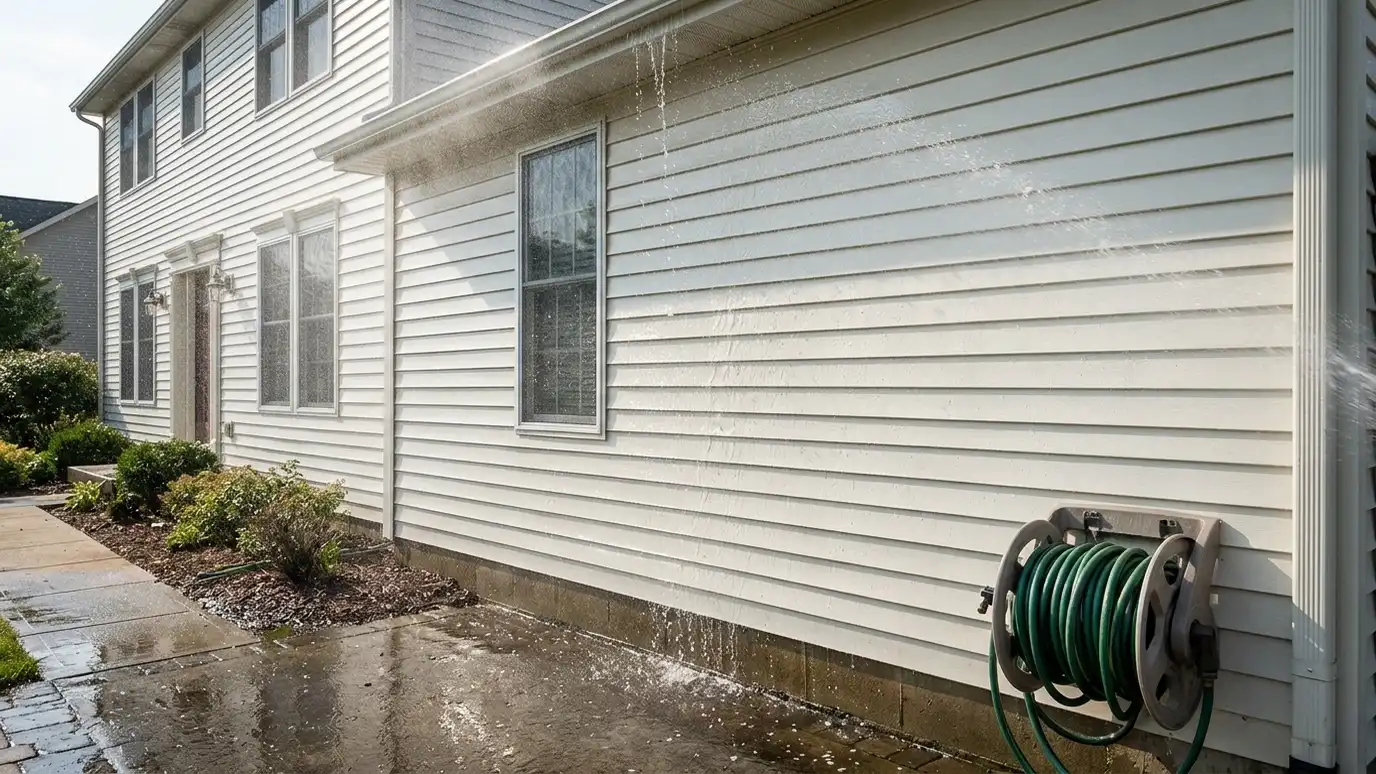 House WashingGentle, thorough washing of siding, trim, porches and soffits to lift dirt, pollen, algae and mildew from the…Explore
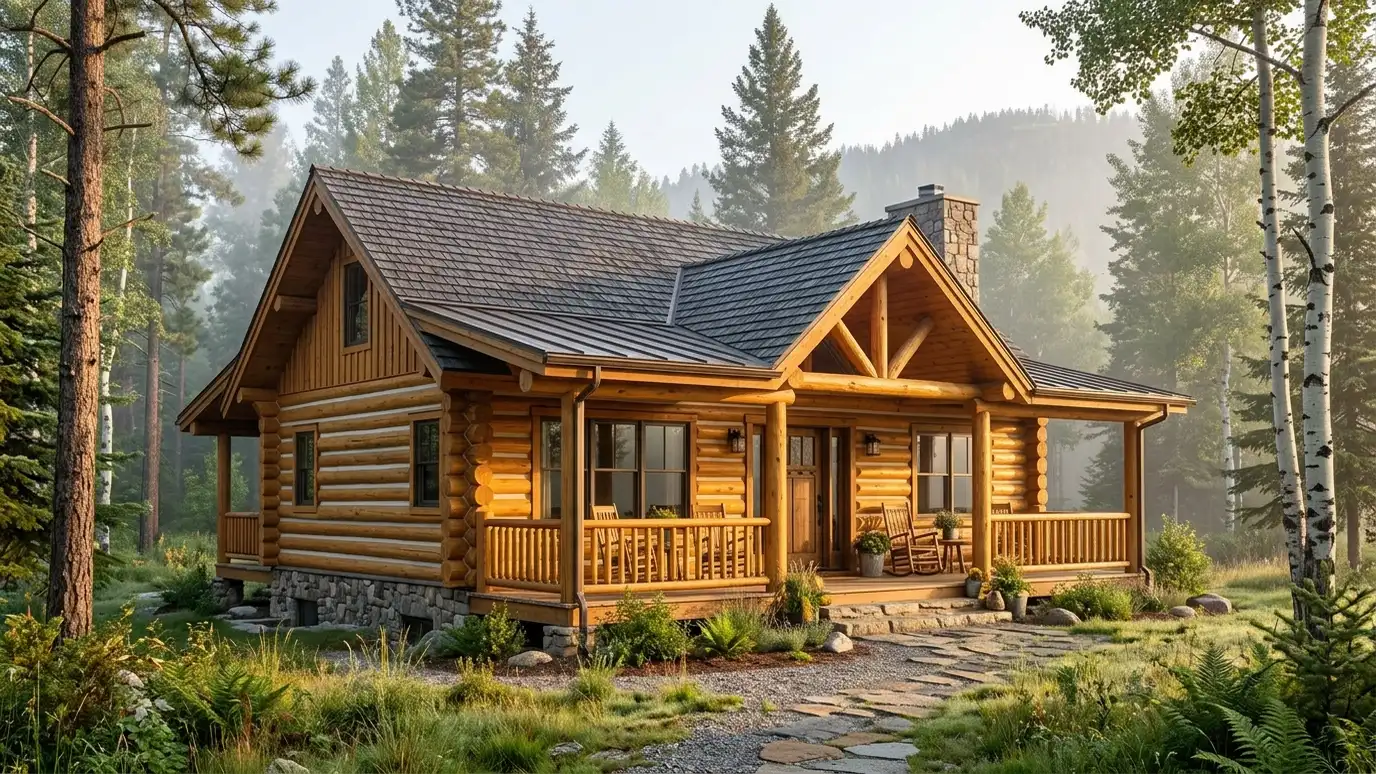 Wood and Log Home CleaningCleaning for cedar, log and painted wood siding that lifts mildew, dirt and gray weathering and prepares wood…Explore
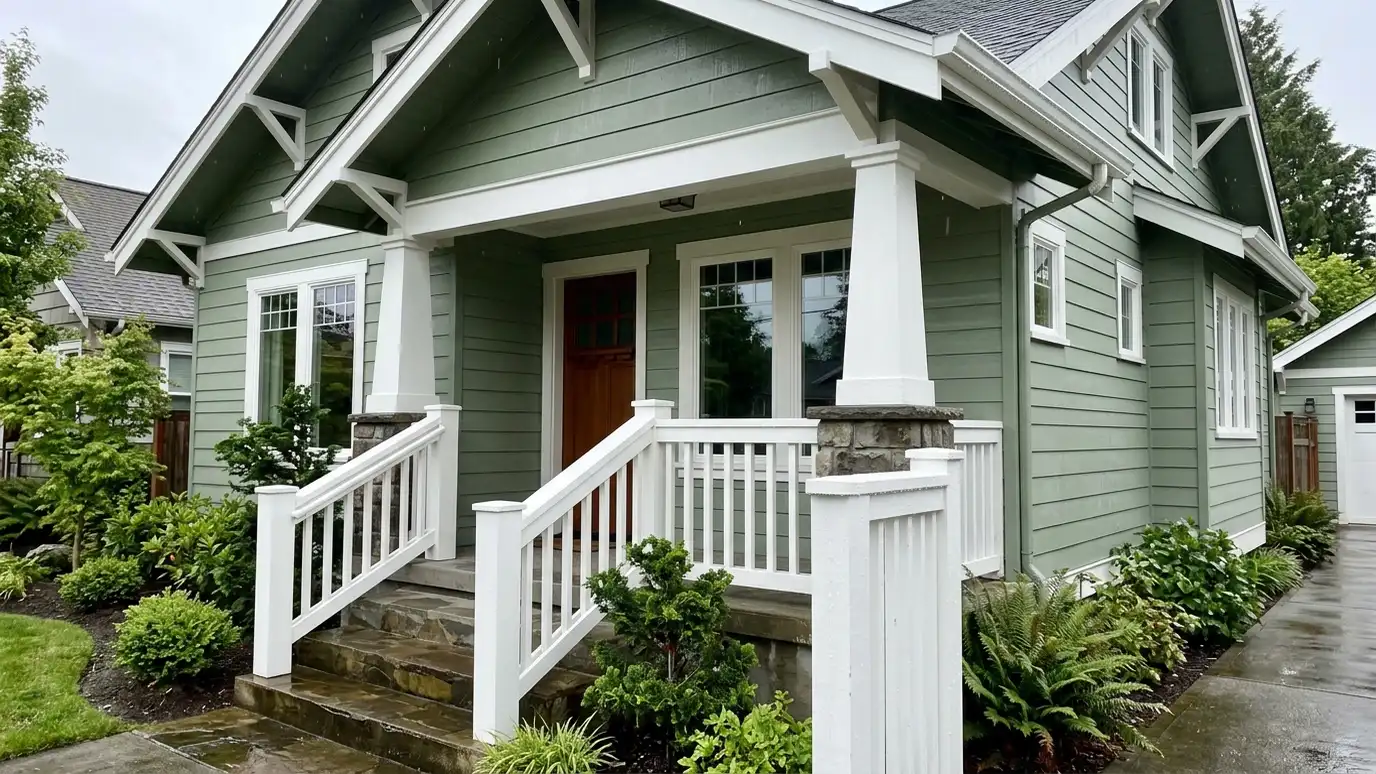 Fiber Cement Siding CleaningCleaning for fiber cement siding and trim that removes algae, mildew and dirt while protecting the painted surface…Explore
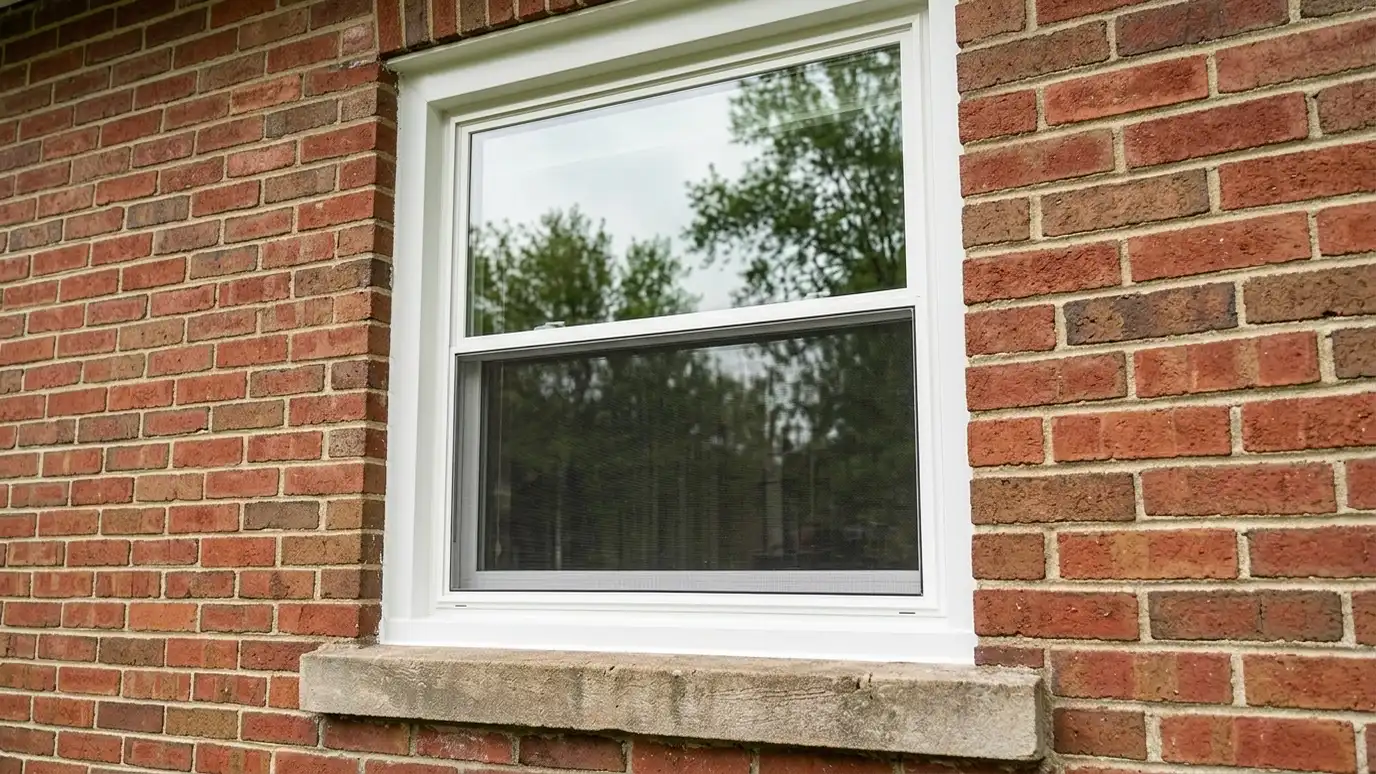 Exterior Window and Screen CleaningStreak-free cleaning of exterior windows, frames, sills and screens as part of a house wash or on its…Explore
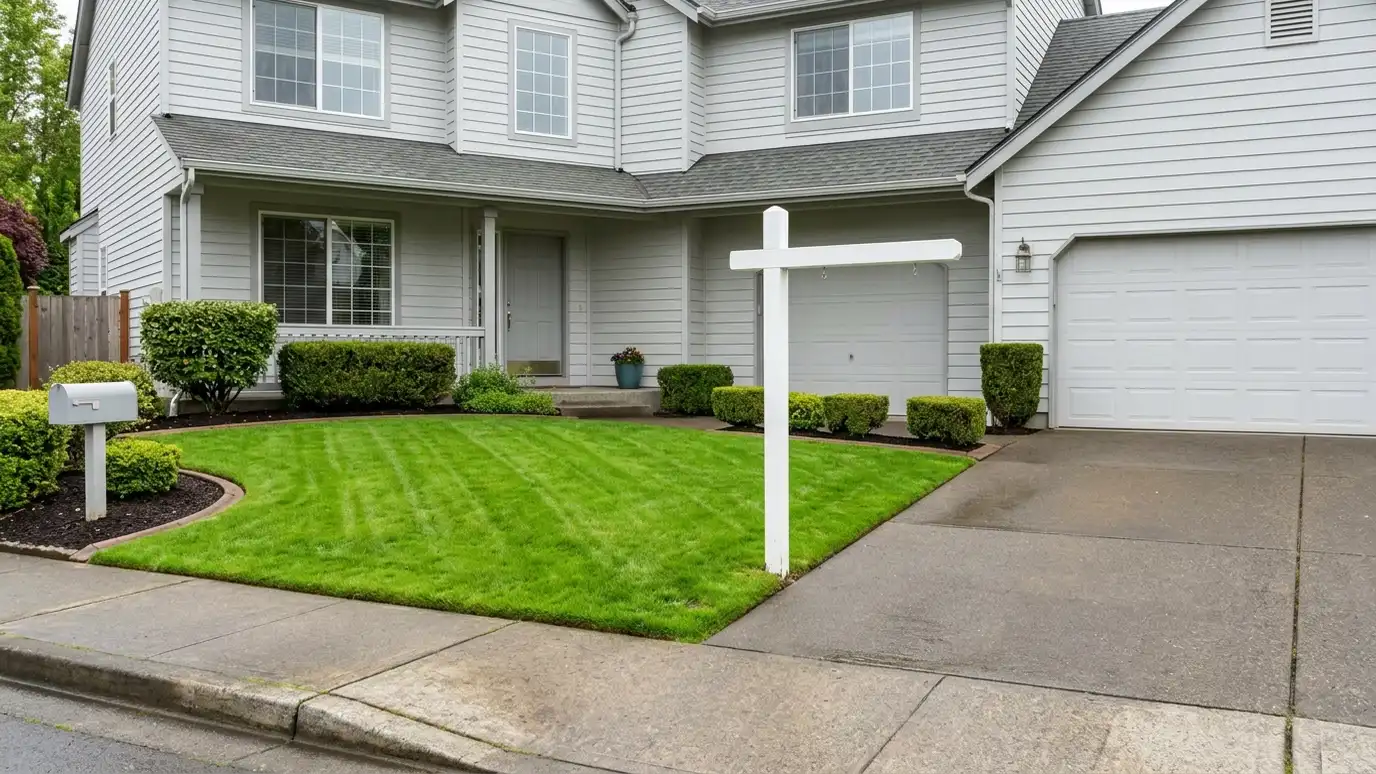 Pre-Sale and Move-In WashingA full exterior wash for homes about to be listed, sold or moved into, covering siding, driveway, walkways…Explore
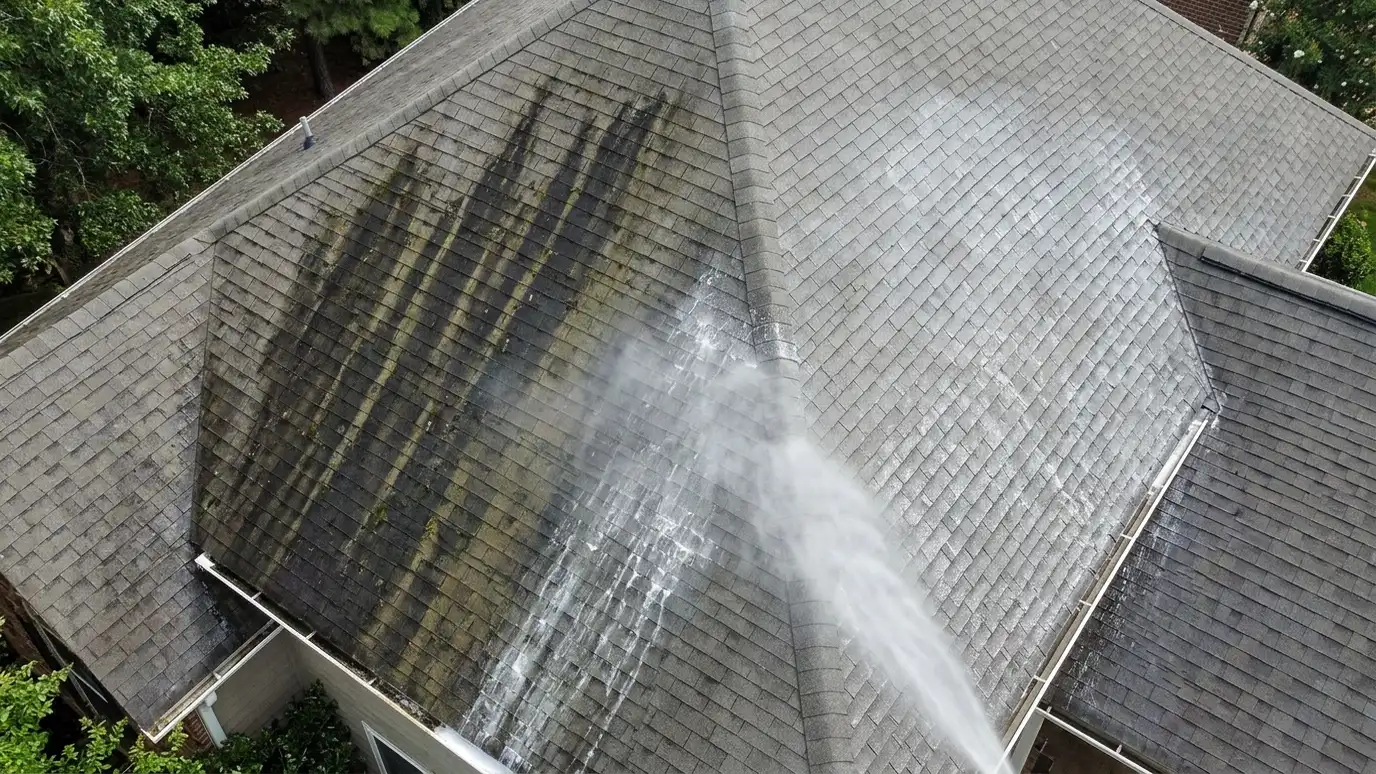 Roof CleaningSoft wash cleaning that removes black algae streaks, moss and lichen from shingle, metal and tile roofs without…Explore
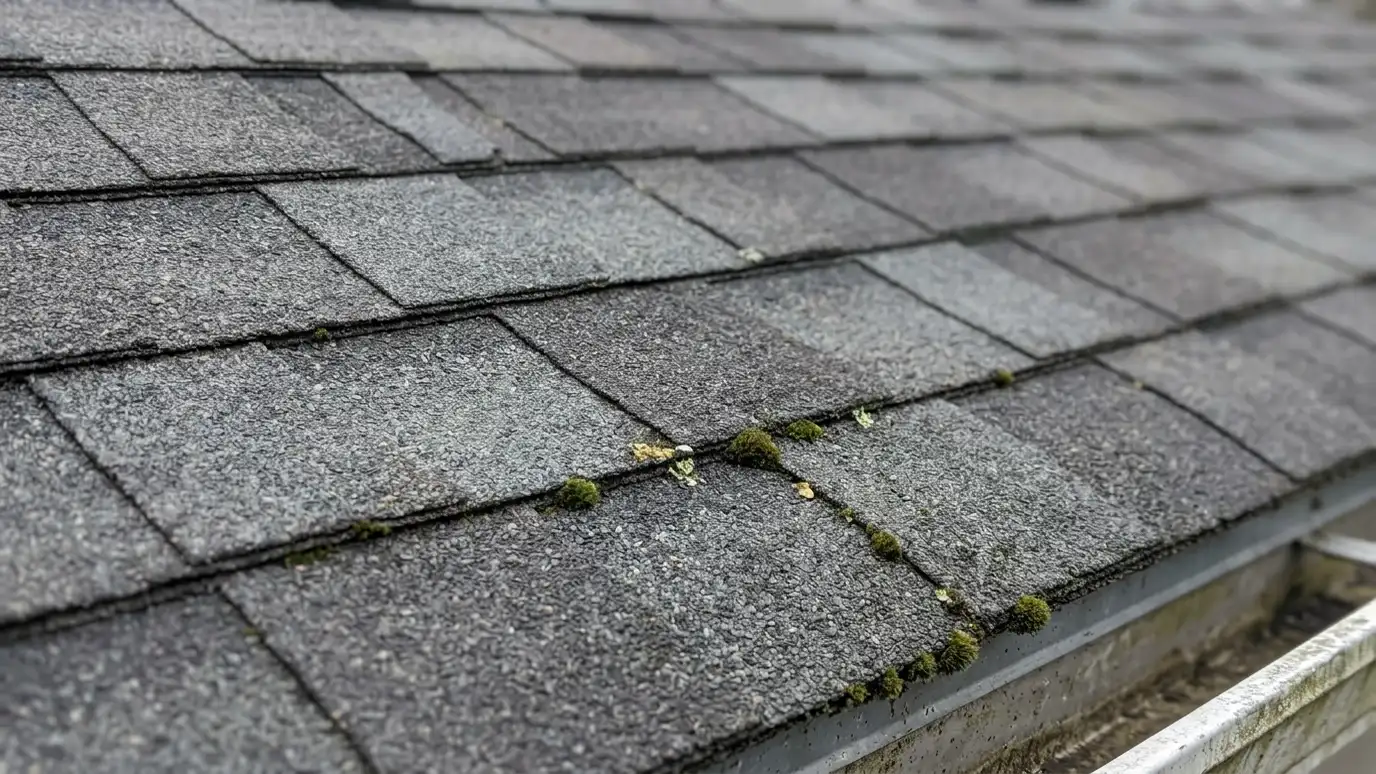 Roof Moss and Lichen RemovalTreatment and gentle removal of moss and lichen from roofs, with attention to shingle edges, valleys and shaded…Explore
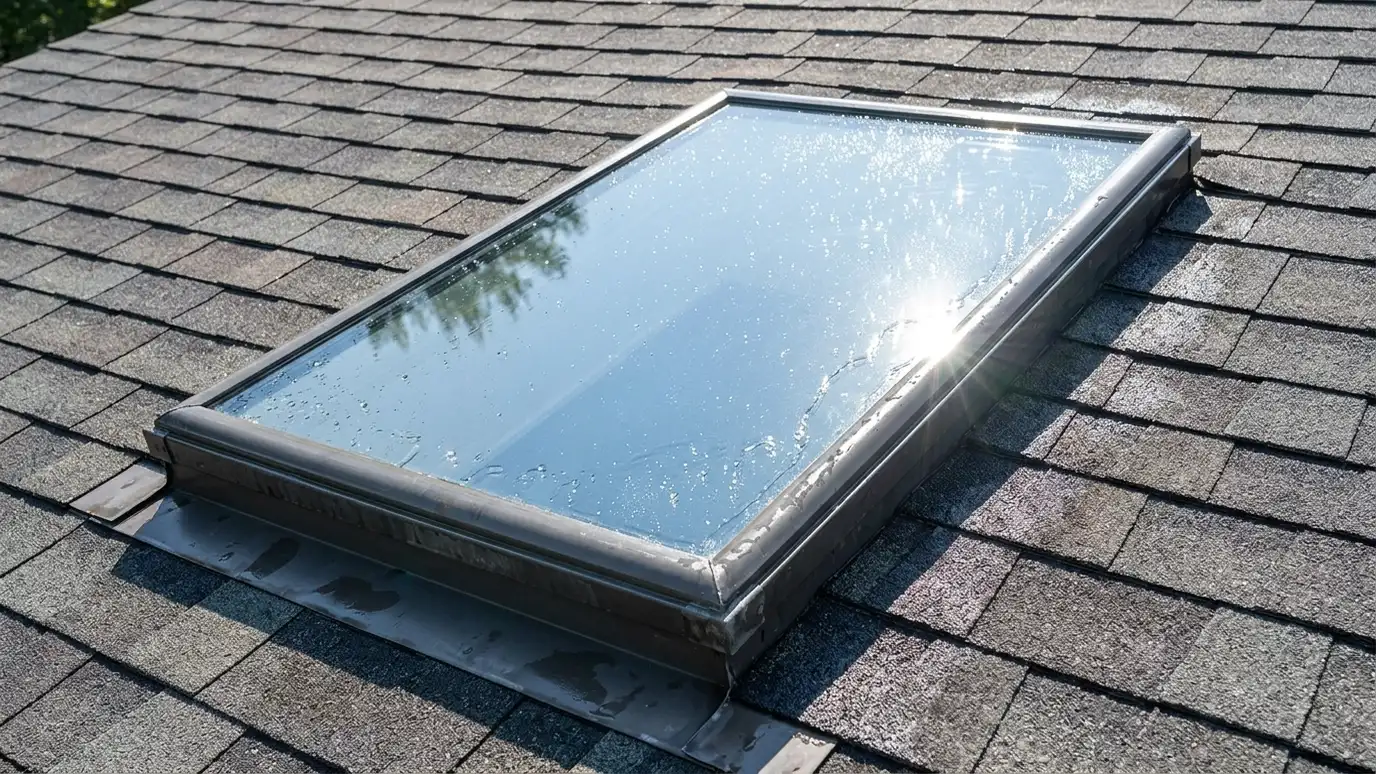 Skylight and Glass CleaningCleaning for skylights, roof windows and glass roof panels that removes pollen, algae, hard water film and debris…Explore
Size an area, check a schedule or ballpark a budget.
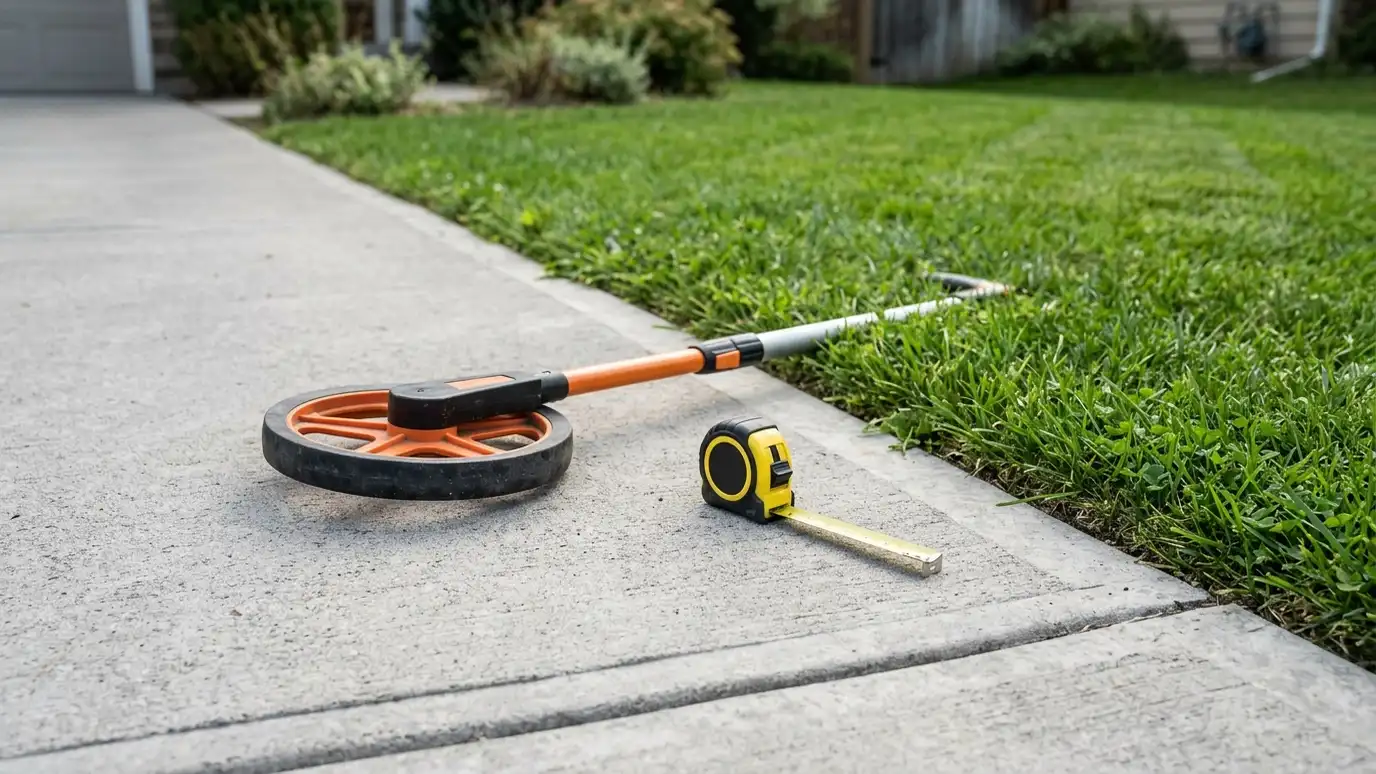 Pressure Washing Area and Materials CalculatorEnter your measurements to see area, water, solution, sealer and time to plan for houses, flatwork, decks, fences and roofs.Try it
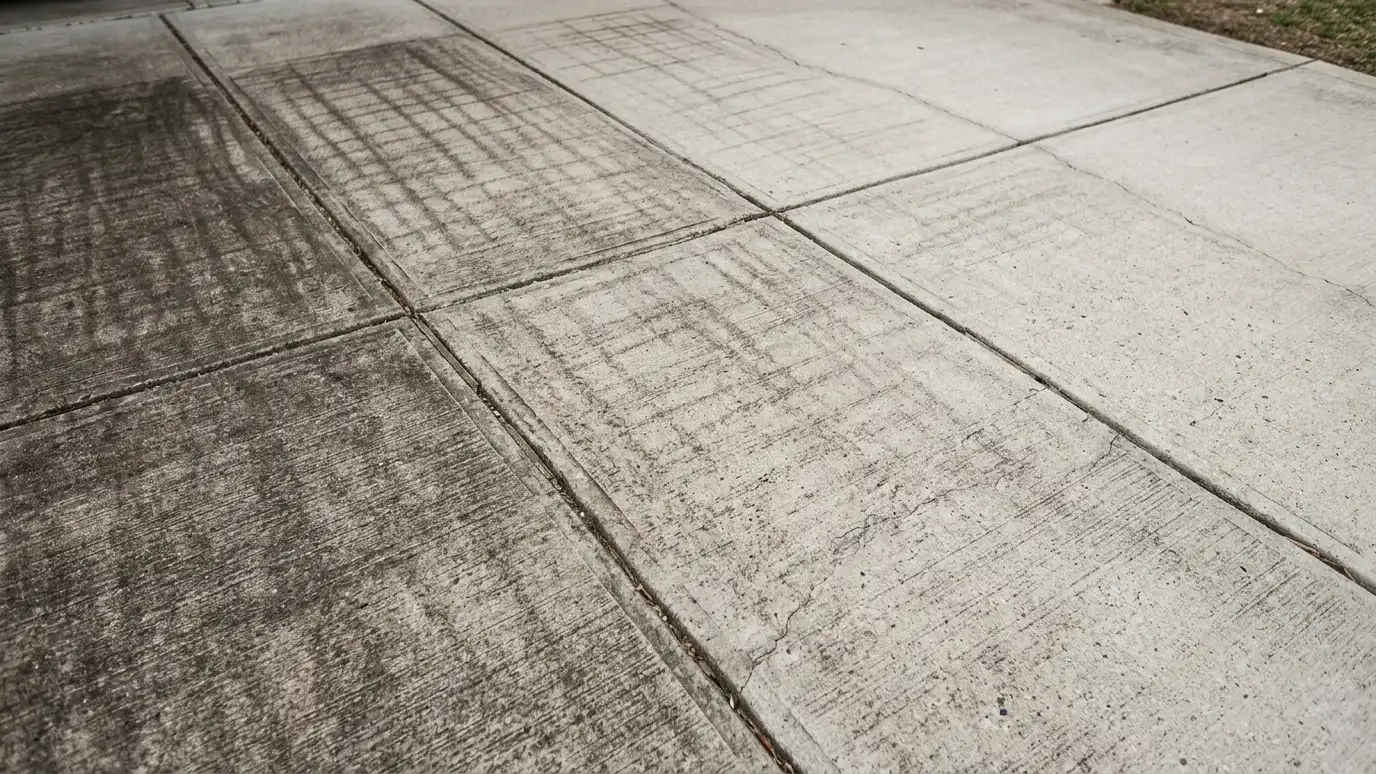 How Often Should I Pressure Wash? CheckerPick a surface, shade and tree cover and the signs you see to learn how soon it likely needs cleaning.Try it
 Pressure Washing Budget PlannerPick a washing, cleaning or sealing job, set the size and add extras to see a ballpark planning range. Placeholder values only.Try it
For algae, mildew and light soil, yes, and it is often longer lasting because it treats the growth itself.
Soft washing often uses less water, depending on the equipment and job.
Yes. Most professional crews use both and choose by surface.
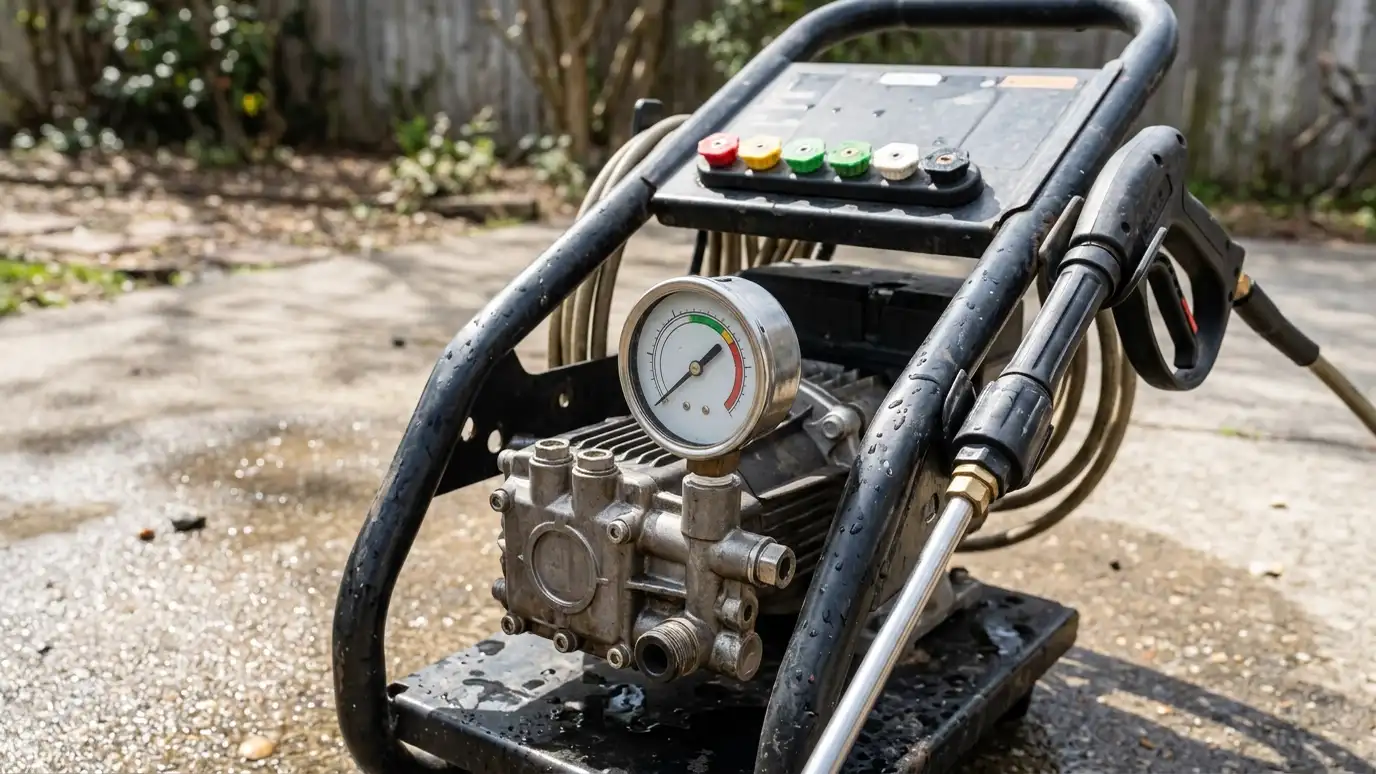 Comparison guidePSI and GPM ExplainedWhat PSI and GPM mean, how pressure and flow work together and why more is not always better…Learn more
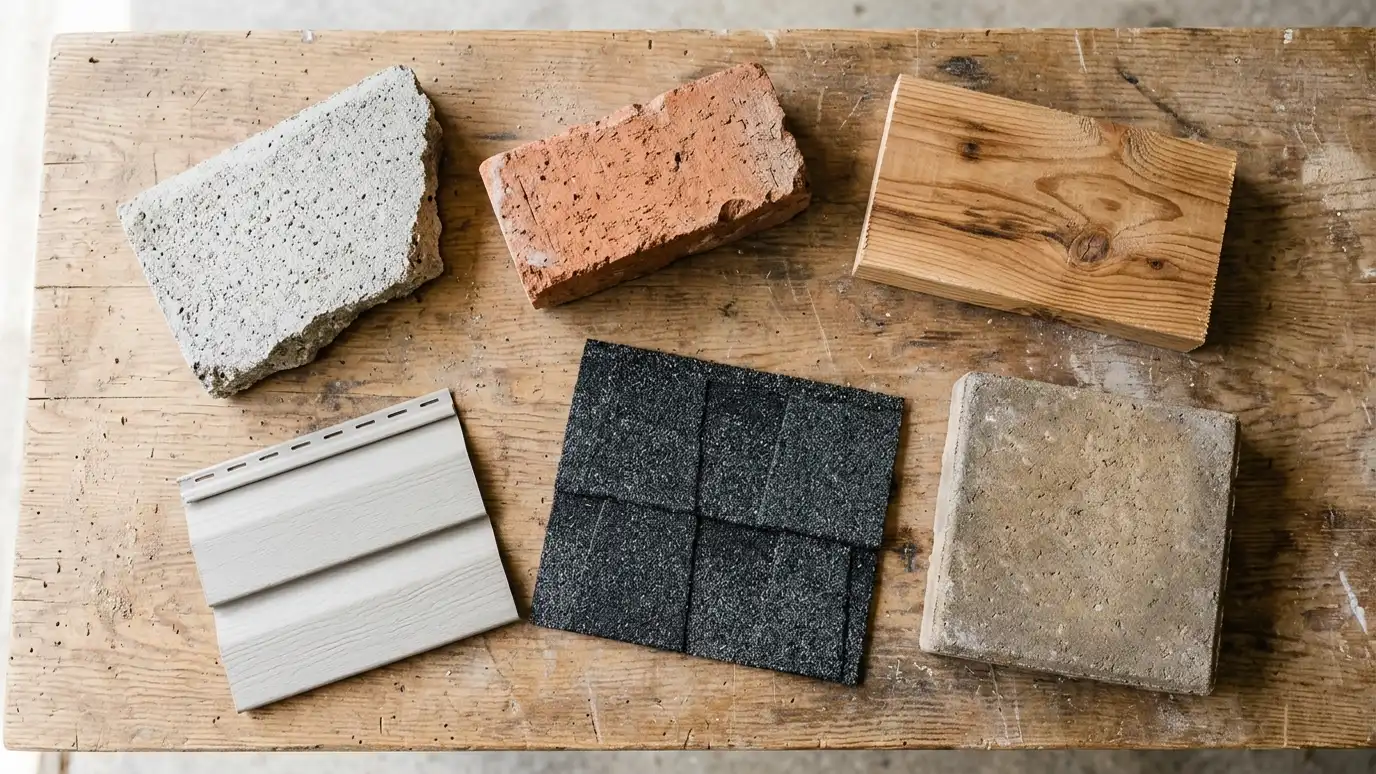 Comparison guideSurfaces and Safe PressureHow concrete, brick, vinyl, wood, composite, stucco, roofs and other surfaces differ in the pressure and methods they…Learn more
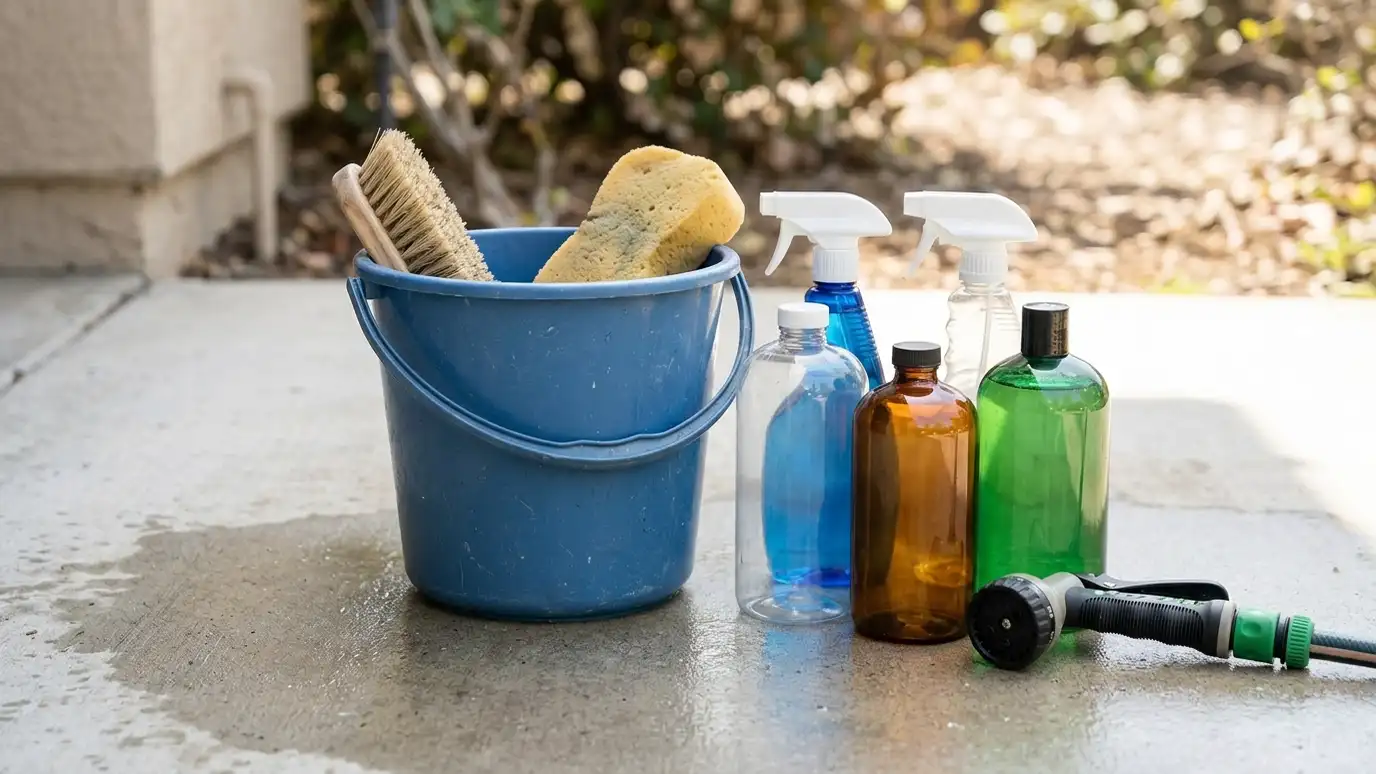 Comparison guideCleaning Solutions ExplainedWhat common exterior cleaning solutions do, from detergents and degreasers to oxidizers and acids, and how they are…Learn more
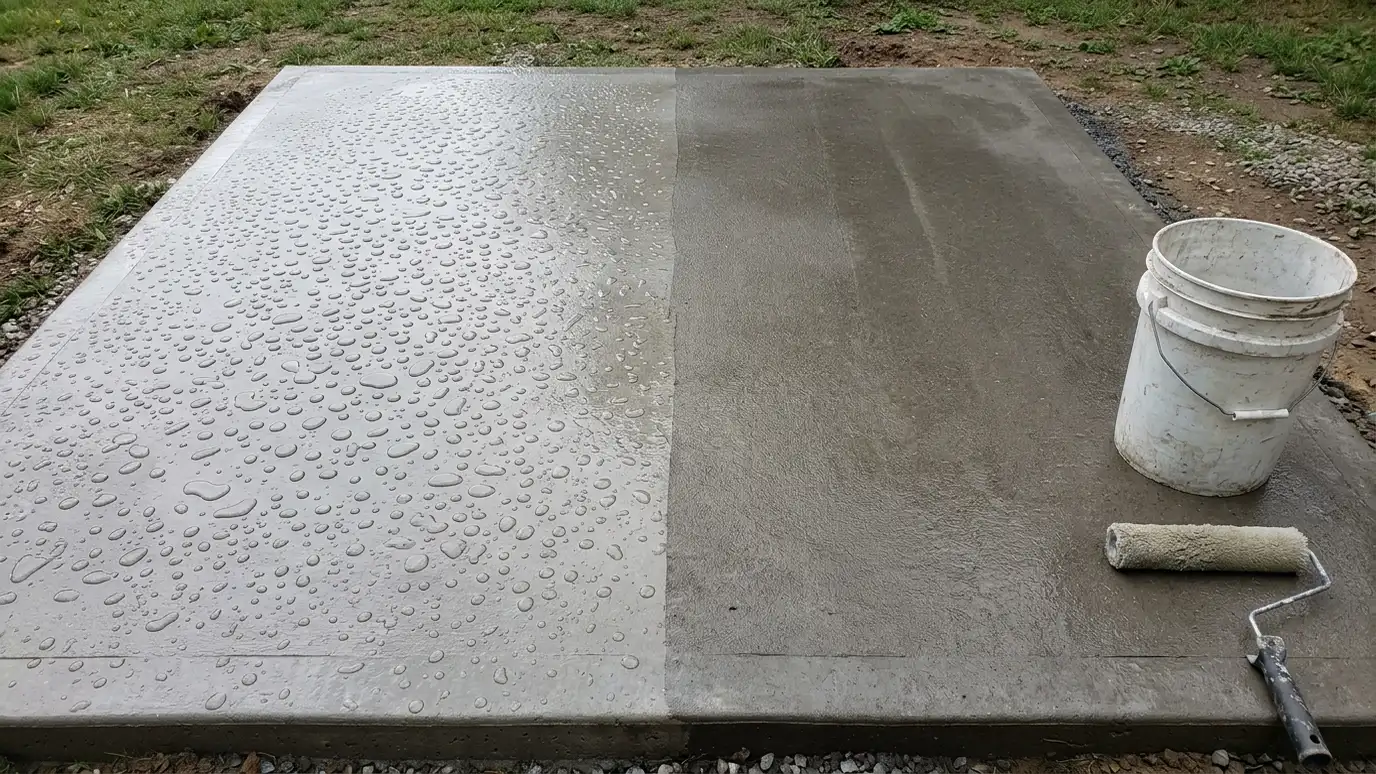 Comparison guideConcrete Sealers ComparedPenetrating and film-forming concrete sealers compared by look, protection, traction and upkeep for driveways, patios and pool decks.Learn more
Call us and describe your property. We will look at the surfaces, talk through options and give you a clear written estimate.