Start with an inspection
Walk the deck and look for loose boards, popped nails, rusty screws, soft spots and wobbly railings. Probe suspect boards with a screwdriver.
Cleaning and staining cannot fix rot or structure, so repairs come first.
A deck builder can evaluate anything that looks unsafe.
Take photos of your deck before cleaning. They help you notice changes in color and condition and are useful if you plan repairs. A before photo also makes the after result more satisfying.
Clean with the right method
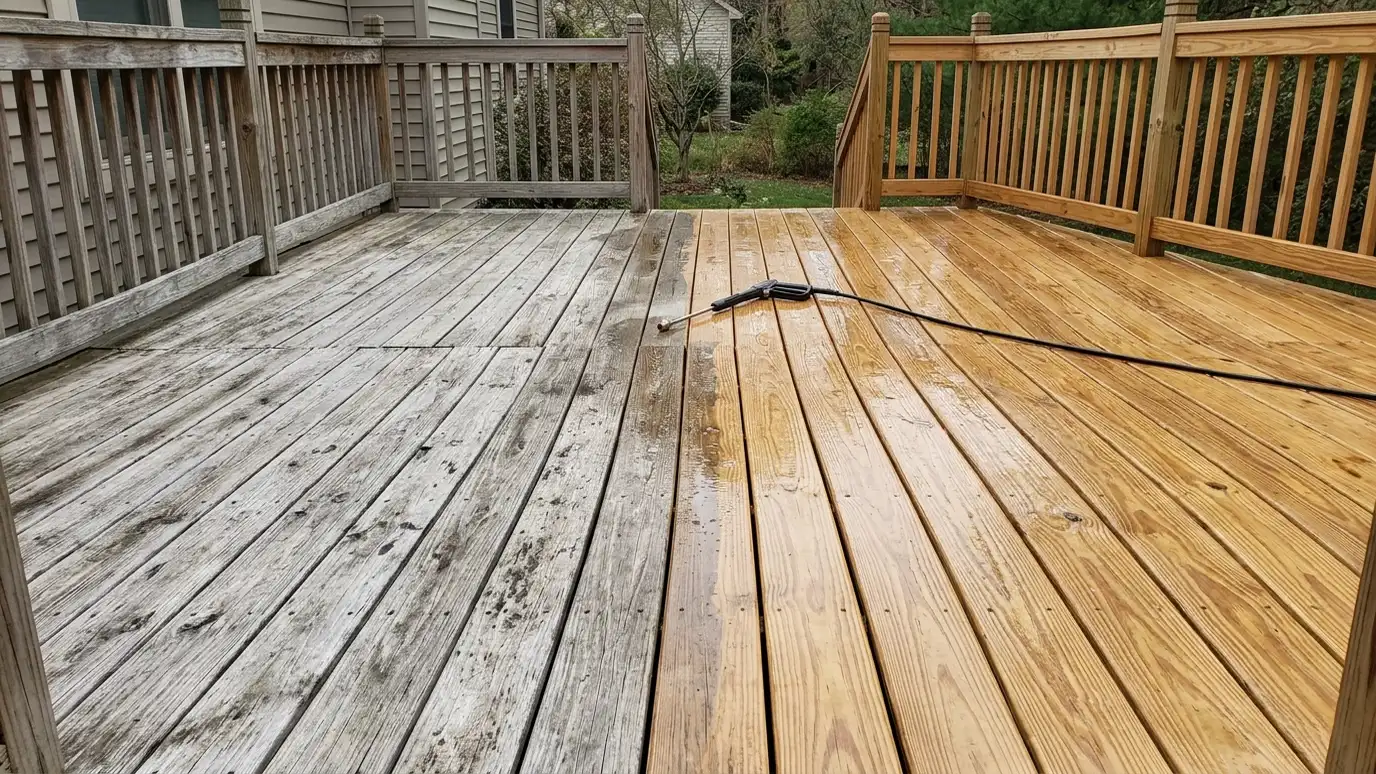
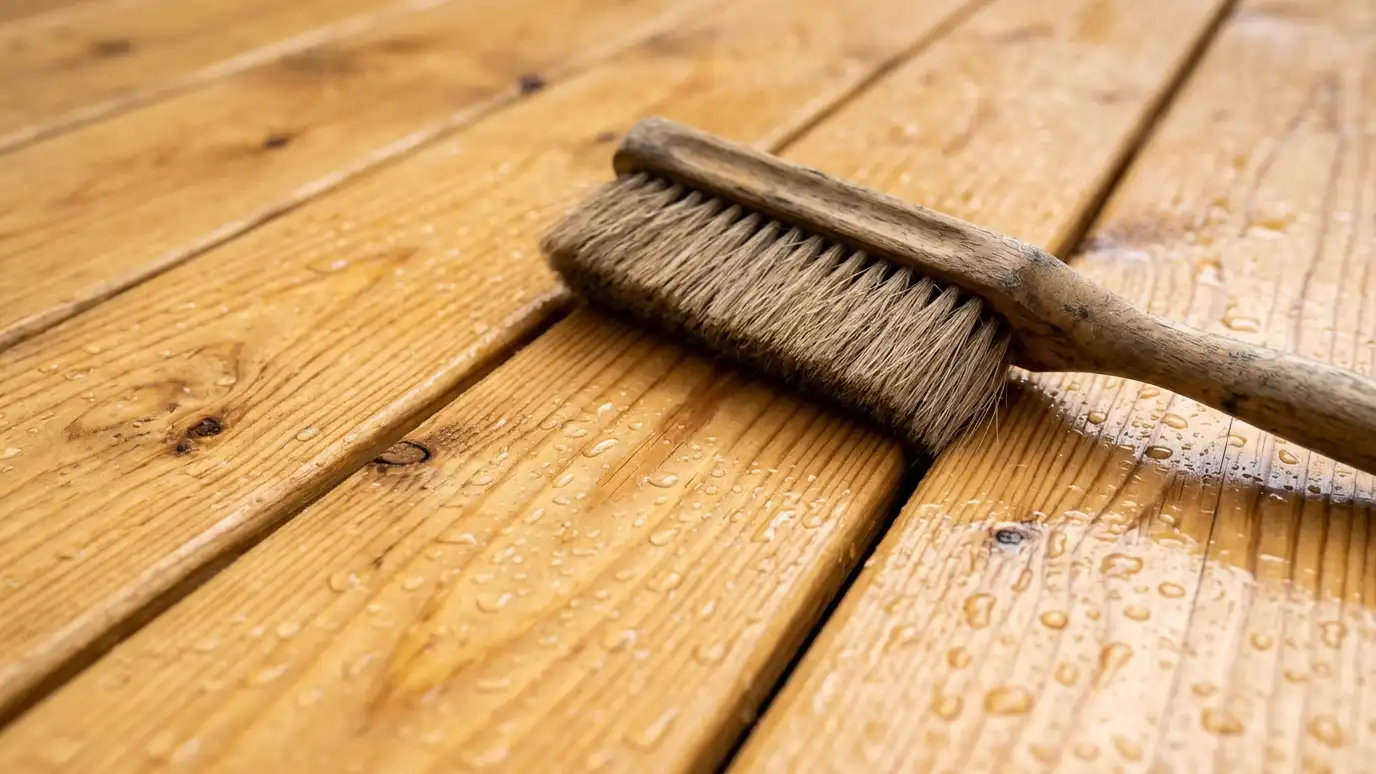
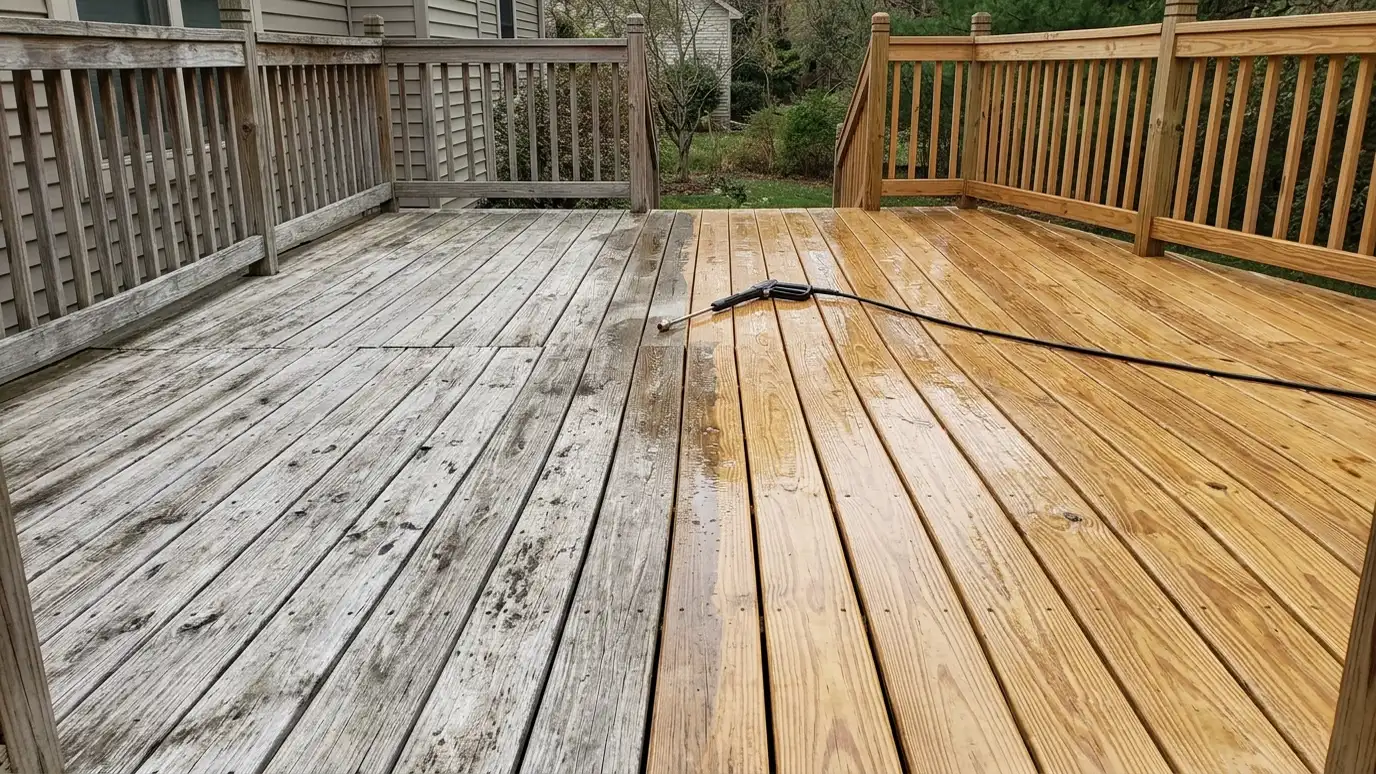
Wood decks are cleaned with a deck cleaner, brushing along the grain and a controlled rinse with a wide fan. Composite decks use soft brushes and moderate pressure.
Narrow tips and close spray raise fibers and gouge wood.
Protect plants and nearby siding.
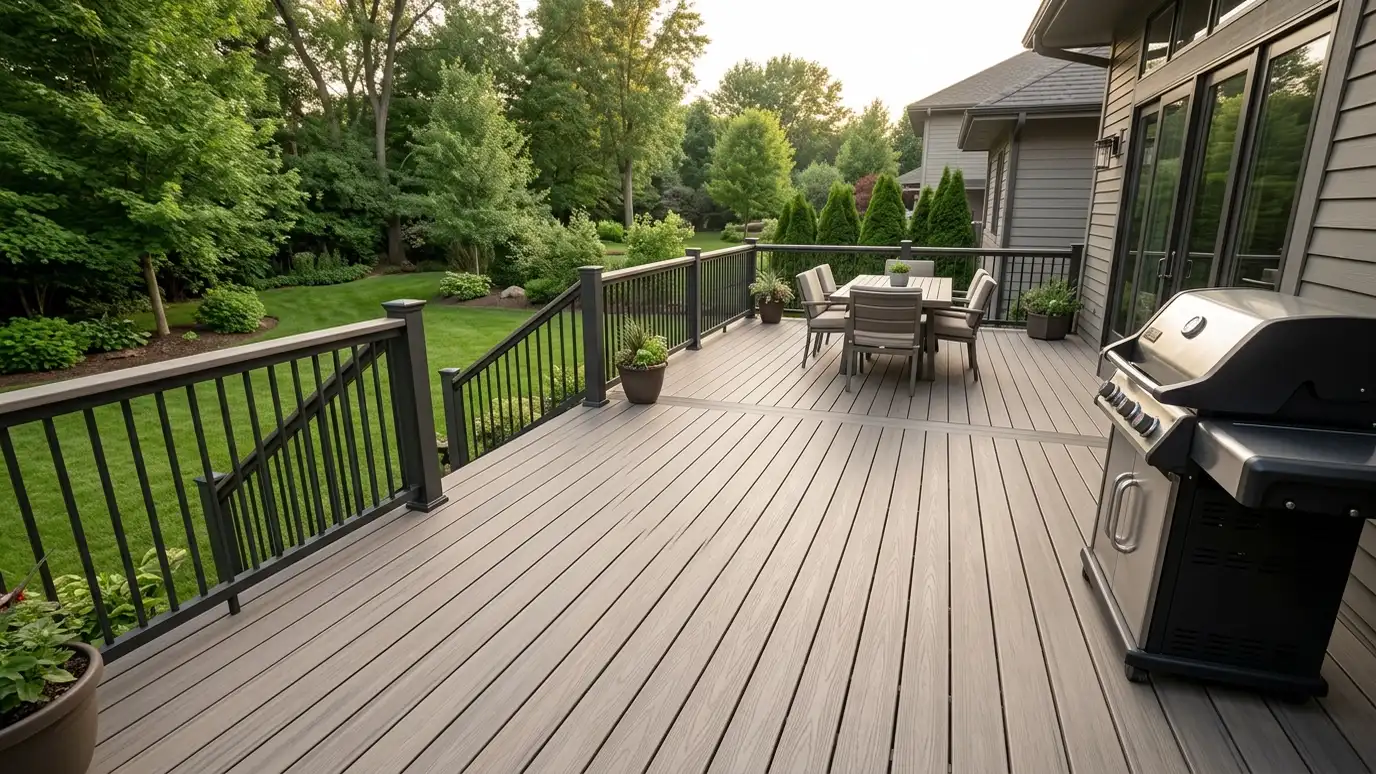
If you have a composite deck, check the care instructions from the maker. They may list approved cleaners and warn against certain tools. We follow them whenever we can.
Strip and brighten
If an old stain is failing, a stripper removes it, and a brightener restores natural tone and neutralizes cleaners.
Rinse thoroughly after each step.
Skipping brightening can leave blotchy results.
Brightening is the step that surprises most owners. A wood brightener restores the warm color and opens the grain, so the stain absorbs evenly. It is worth the extra step.
Let the wood dry
Dry time is the most overlooked step. Wood must dry enough to accept stain, often a few dry days, depending on weather.
Staining wet wood traps moisture and can lead to peeling.
We check moisture before we finish.
Check the forecast for several dry days. Humidity and shade slow drying, and we may recommend waiting longer on a shaded deck. Patience at this step gives a better finish.
Choose a finish
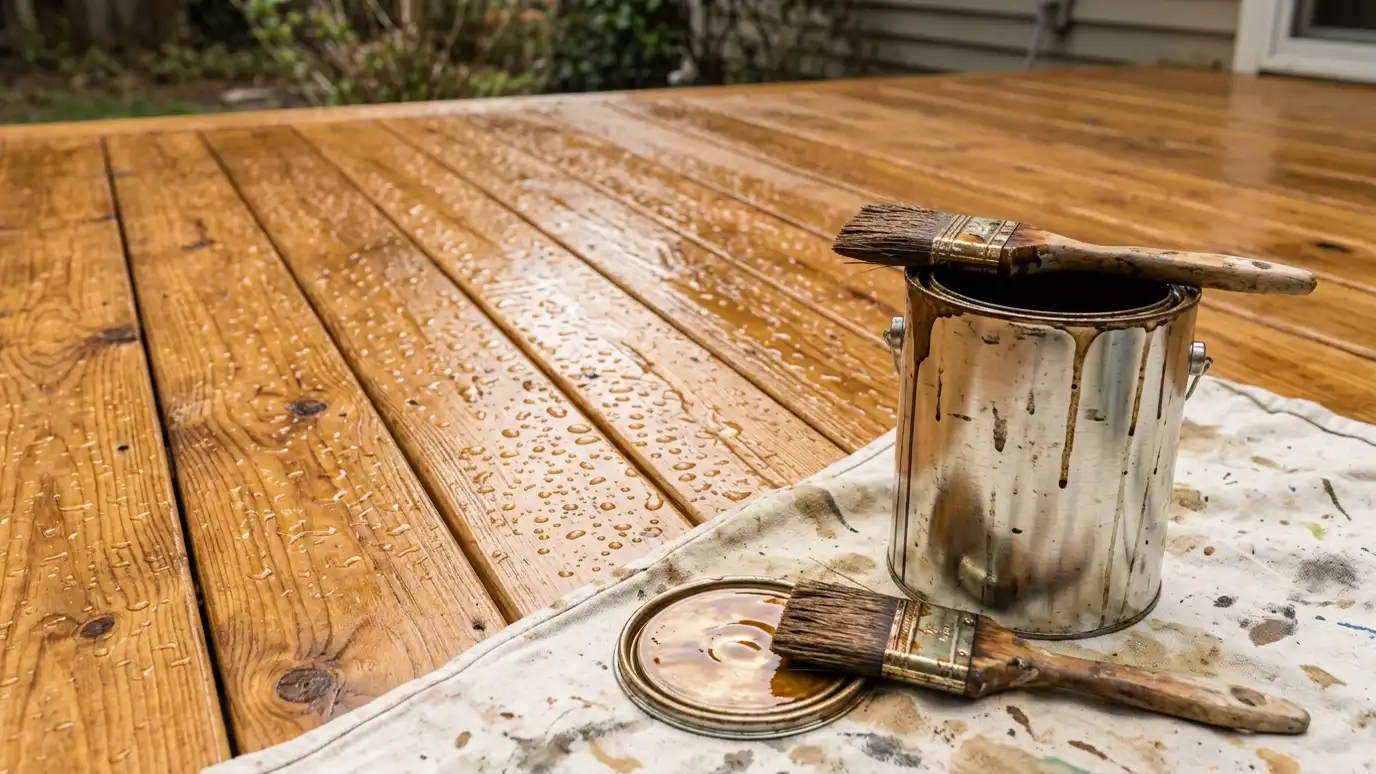
Clear sealers keep natural color and give little UV protection. Transparent and semi-transparent stains add tone with visible grain, and solid stains cover like paint.
Oil-based and water-based products behave differently.
Sample boards help you decide.
Test stain on a hidden board before committing. Colors look different on different woods and in different light. We bring samples so you can compare in your own yard.
Maintain it
Sweep debris, clean spills and wash once a year. Reapply stain when water no longer beads on the surface.
Keep planters on feet so water does not trap under them.
Trim branches to let in sun and air.
Keep a short log of when you stained and which product you used. It makes maintenance easier and helps you choose a compatible product next time.
Inspect, clean gently, brighten, let the wood fully dry and then choose a finish that fits your wood and your upkeep style.